
1. Why do strip light profiles matter in marine lighting?
Strip light profiles protect LED strips from the real enemies on boats: salt mist, vibration, UV, water spray, cleaning chemicals, and heat buildup. Bare LED tape may work in a showroom sample, but marine environments punish weak materials fast.
The profile is not just a housing. It controls heat transfer, beam shape, mechanical protection, and sealing reliability. We often see installers struggle with LED tape peeling from fiberglass or aluminum surfaces after a few weeks at sea. The cause is rarely one factor. It may be salt residue, poor surface preparation, low-grade adhesive, or trapped heat under a decorative cover.
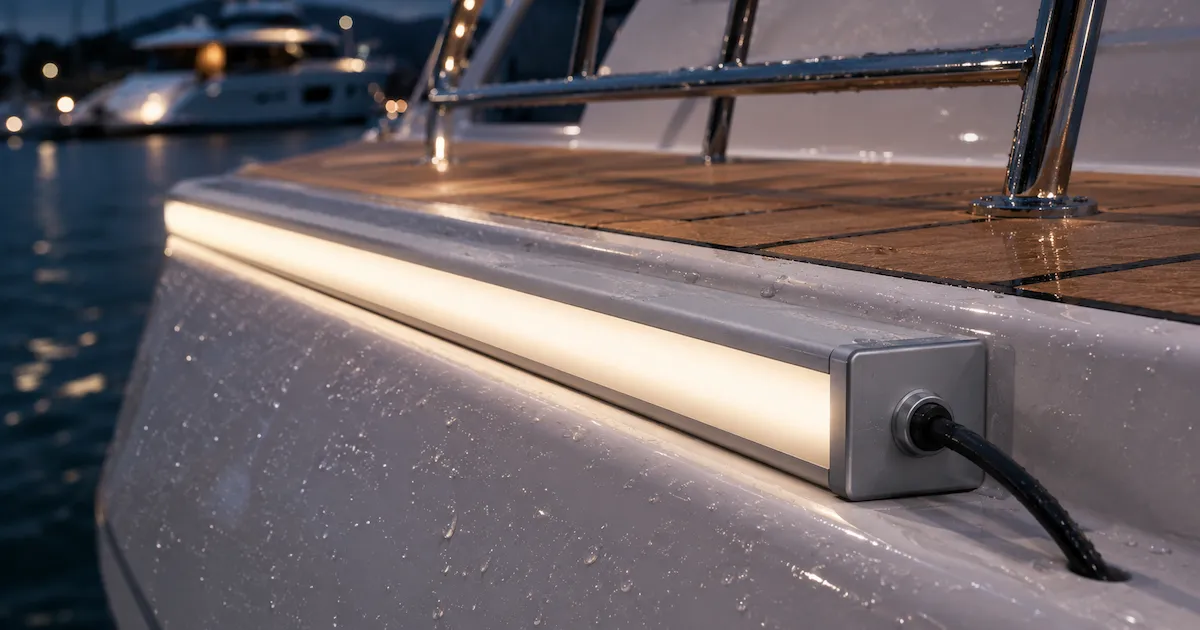
Three common field examples show why profiles matter:
- A yacht cabin project used bare IP20 strip behind a wooden valance. It looked clean at handover, then failed due to condensation.
- A deck stair project used low-cost silicone tube without proper end sealing after cutting LED strips, and water entered at cut points.
- A marina walkway used high-wattage LED tape inside a shallow plastic channel. Heat reduced lumen output and shortened service life.
| Marine lighting zone | Main risk | Recommended profile type | Business risk if ignored |
|---|---|---|---|
| Cabin ceiling coves | Condensation, glare | Aluminum profile with opal diffuser | Visible dotting and color shift |
| Exterior deck | Spray, UV, foot impact | IP67 silicone neon or recessed sealed profile | Water ingress and rework |
| Engine room | Heat, oil vapor, vibration | Deep aluminum profile with clear PC cover | Early lumen drop |
| Railings | Curved mounting, spray | Flexible silicone side-bend profile | Cracking or weak adhesion |
| Marina walkway | Impact, standing water | Recessed walkover-rated profile | Safety liability |
2. Which materials are best for saltwater and marine corrosion resistance?
Material selection has a direct effect on service life. The most common options are anodized aluminum, 316 stainless steel mounting clips, silicone extrusion, PMMA diffuser, and polycarbonate diffuser. Each has a place.
Anodized aluminum works well for cabin, cove, cabinet, and many protected exterior applications because it transfers heat away from the LED strip. However, exposed aluminum must be protected from direct salt attack and galvanic co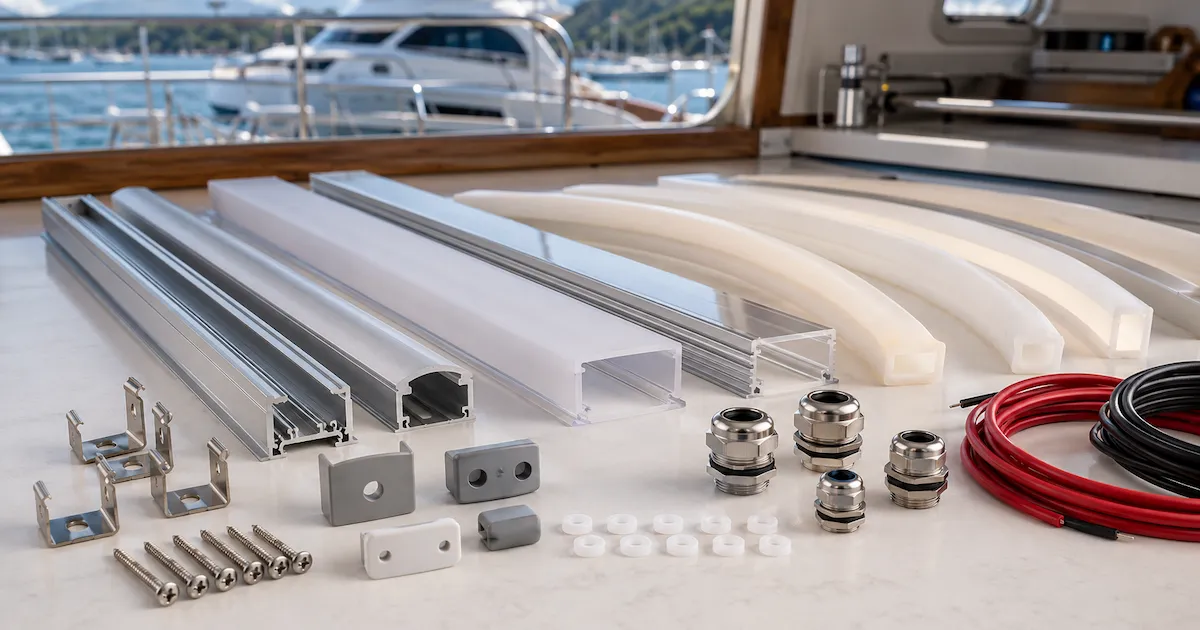 rrosion. For open deck or rail mounting, use marine-grade fasteners and isolation washers where dissimilar metals touch.
Silicone profiles are strong for waterproof continuous light lines. They tolerate vibration and can be made in top-bend or side-bend versions. However, low-grade silicone yellows under UV and may swell near oils or harsh cleaners. Ask for UV-resistant silicone and real test data, not only a catalog claim.
| Material option | Strength in marine use | Weak point | Best application |
|---|---|---|---|
| Anodized aluminum | Good heat dissipation, rigid shape | Salt corrosion if exposed poorly | Cabins, coves, protected decks |
| 316 stainless clips | Strong salt resistance | Higher cost | Exterior mounting hardware |
| UV silicone | Waterproof, flexible | Heat transfer is lower than aluminum | Neon effect, rails, curved areas |
| Polycarbonate diffuser | Impact resistance | Can scratch | Walkways, engine areas |
| PMMA diffuser | Clear light output | Lower impact strength | Interior decorative lines |
3. What IP rating should marine LED strip profiles use?
IP rating is often misunderstood. IP65 resists water jets, IP67 handles temporary immersion, and IP68 is designed for longer immersion under stated conditions. But there’s a catch: an IP rating is only valid if the full assembly is sealed correctly, including end caps, cable exits, solder points, and connectors.
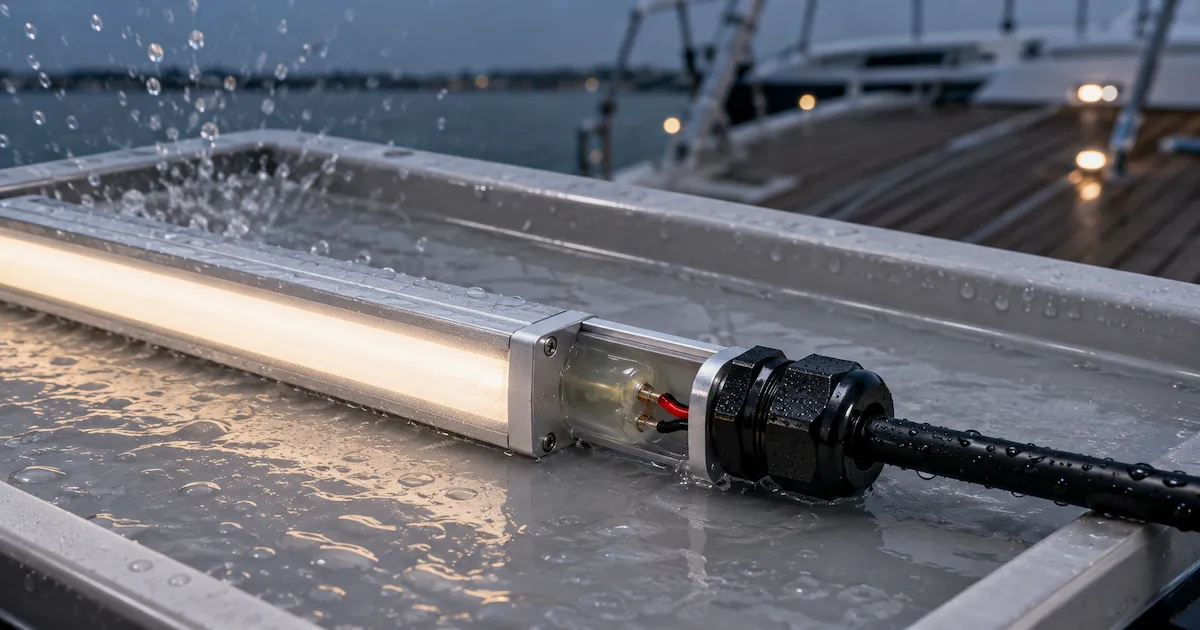
For interior cabins with occasional condensation, IP20 strips inside aluminum profiles can work if the space is dry and ventilated. For bathrooms, galleys, and semi-protected cockpits, IP65 or IP67 is safer. For decks, swim platforms, and bilge-adjacent areas, specify IP68 LED strip manufacturer solutions or IP67-rated systems depending on water exposure.
We once saw a project fail because the buyer ordered IP67 LED strips but used non-waterproof quick connectors inside a deck profile. The strip survived, the connector did not. The warranty dispute became expensive because the full system was not rated.
| Rating | Water protection level | Marine profile use | Warning point |
|---|---|---|---|
| IP20 | No water protection | Dry interior coves | Avoid near condensation |
| IP65 | Water jet resistant | Galley, protected cockpit | Not for standing water |
| IP67 | Temporary immersion | Deck edges, steps, wet zones | End sealing must be correct |
| IP68 | Long exposure under stated test conditions | Swim platforms, exposed exterior | Ask for test depth and duration |
Don’t buy by IP label alone; request the sealing method, cable gland details, potting compound type, and confirm how to waterproof LED strip cut points correctly.
4. Are silicone neon profiles better than aluminum profiles for boats?
Silicone neon and aluminum profiles solve different problems. Silicone neon gives a smooth dot-free line and strong water resistance. Aluminum profiles give better heat control and more rigid mounting. Neither is always better.
Common Myth: Higher wattage always means better brightness. Reality: brightness depends on lumen efficiency, diffuser loss, heat dissipation, voltage stability, and optical design. A 14.4W/m strip in a poor silicone sleeve can run hotter and deliver less useful light than a 9.6W/m strip inside a proper aluminum heat sink.
| Profile type | Best point | Limitation | Use case |
|---|---|---|---|
| Silicone neon top-bend | Dot-free lines, wet protection | Lower heat transfer | Deck outlines, signage, accent lines |
| Silicone neon side-bend | Follows curves sideways | Needs careful bend radius | Railings, curved furniture |
| Aluminum U-channel | Good heat path, low cost | Needs sealing in wet zones | Cabins, shelves, coves |
| Deep aluminum profile | Better thermal mass | Larger size | High-output ceiling or task lighting |
| Recessed aluminum profile | Clean flush finish | More labor | Stairs, panels, furniture grooves |
Pro Tip from the VST Technical Team: “If the strip runs above 10W/m, don’t treat the profile as decoration. Treat it as a heat sink. Lower strip temperature protects lumen output and LED life.”
5. Which profile shapes suit cabins, decks, railings, and engine rooms?
Profile shape should follow the installation zone. A cabin cove needs soft indirect light. A deck step needs anti-glare and mechanical protection. A railing may need side-bending flexibility. An engine room needs visibility, temperature control, and chemical resistance.
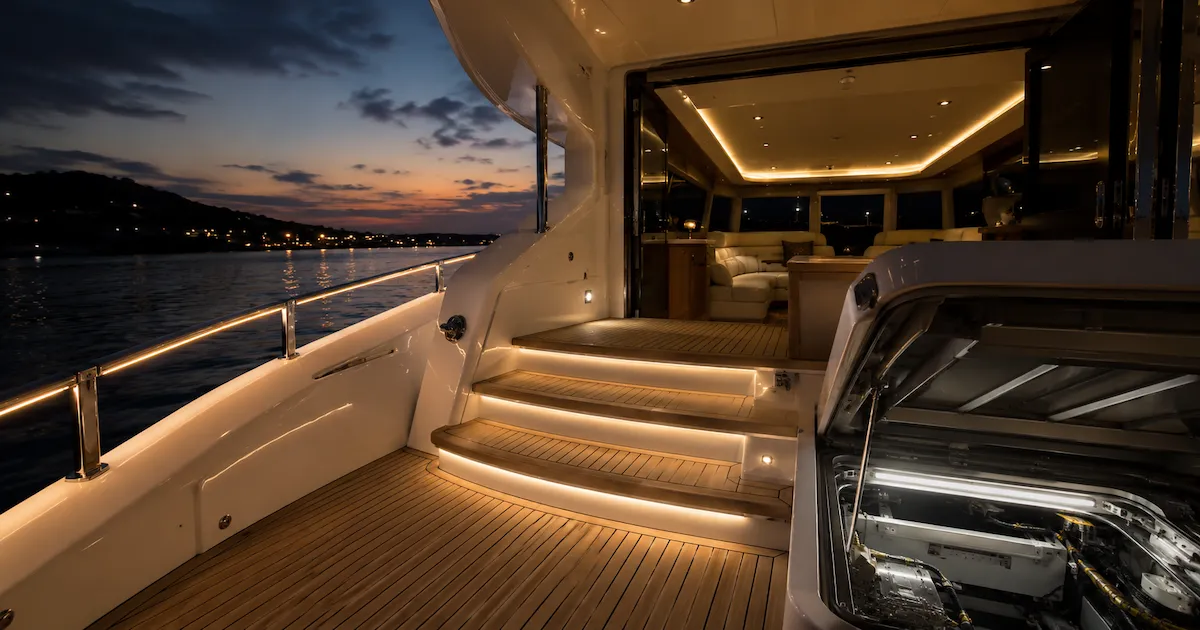
For cabins, slim surface-mounted aluminum profiles with opal diffusers are common. They hide LED dots and create clean ceiling or wall lines. For furniture and display shelves on yachts, recessed micro profiles reduce visual clutter and protect the tape from cleaning contact.
For decks, choose a recessed LED profile or IP67 silicone neon profiles. If people may step on the area, ask for walkover ratings and PC diffusers. For railings, a flexible LED profile with silicone side-bend construction works well, but bend radius must be respected. For engine rooms, use larger aluminum profiles with clear or frosted PC covers to maintain brightness and handle heat.
| Installation area | Top profile choice | Suggested diffuser | Practical note |
|---|---|---|---|
| Cabin cove | Slim aluminum U-profile | Opal PC or PMMA | Soft light, lower glare |
| Galley cabinet | Recessed micro profile | Frosted PC | Easy cleaning |
| Deck step | Recessed sealed profile | Impact PC | Protect from foot traffic |
| Railing | Flexible silicone side-bend | Integrated silicone lens | Respect bend radius |
| Engine room | Deep aluminum profile | Clear PC | Higher lumen output |
6. How do voltage, heat, and run length affect profile selection?
Voltage and heat decide whether a marine strip light system stays stable after installation. Long runs on boats are common, especially along deck edges, stairways, and cabin coves. If you use 12V strips over long distances, voltage drop can create visible brightness loss and color shift.
For runs above 5 meters, 24V is often the better choice. For very long decorative lines, constant-current designs or power injection may be needed. The profile then becomes part of the electrical plan because heat affects current, LED junction temperature, and driver load.
In our thermal imaging checks, shallow plastic channels often trap heat, so buyers should review LED strip heat issues before selecting a profile for marine use. Deep aluminum profiles lower surface temperature and help maintain lumen output. It affects warranty risk and the end client’s opinion of the installer.
| Specification | 12V strip system | 24V strip system |
|---|---|---|
| Best run length | Short runs, small zones | Medium to longer runs |
| Voltage drop risk | Higher | Lower |
| Cable current | Higher current | Lower current |
| Profile heat need | Depends on wattage | Depends on wattage |
| Marine use | Small cabinets, short accents | Deck lines, coves, larger zones |
7. Which diffuser and lens options reduce glare on boats?
Glare control is a safety and comfort issue. On water, reflections multiply light. A bright LED line that looks acceptable in a workshop can become harsh inside a glossy yacht cabin or dangerous near stairs at night.
Opal diffusers soften the light and hide LED dots. Frosted diffusers give a balance between output and comfort. Clear diffusers deliver more lumens, but they can show dotting unless the LED density is high or the profile is deep. For exterior accent lines, silicone neon lenses give a continuous glow and better visual uniformity.
| Diffuser type | Light effect | Output loss range | Best marine use |
|---|---|---|---|
| Clear PC | Highest brightness, visible dots possible | 5–10% | Engine rooms, work zones |
| Frosted PC | Balanced glare control | 10–20% | Galleys, stair zones |
| Opal PMMA/PC | Smooth and soft | 20–35% | Cabins, decorative coves |
| Silicone neon lens | Continuous light line | 25–40% | Exterior accent, rails |
If a client expects a specific lux level, calculate delivered lumens after diffuser loss.
8. How should installers mount profiles to reduce callbacks?
Good installation starts before the strip is powered. Marine surfaces often carry wax, salt, oil, or dust. Adhesive alone is rarely enough for long-term exterior use. Mechanical fixing, clean cable routing, and sealed ends lower failure risk.
We often see installers struggle with corner joints and cable exits. These areas fail because they mix mechanical stress and water exposure. Use strain relief at cable exits, leave service loops where space allows, and avoid tight bends near solder pads.
A practical mounting workflow looks like this:
| Installation step | Recommended action | Reason |
|---|---|---|
| Surface cleaning | Remove salt, wax, grease, and dust | Adhesion and sealant quality improve |
| Dry fit | Check profile length, bend radius, cable path | Reduces field cutting errors |
| Mechanical fixing | Use 316 stainless screws or clips | Prevents peeling under vibration |
| End sealing | Use compatible silicone or potting compound | Stops water ingress at cut points |
| Electrical test | Test before final closing | Finds polarity and voltage issues early |
| Burn-in check | Run for 30–60 minutes | Reveals heat and driver problems |
Before sealing marine LED strip profiles, it helps to understand how waterproof electrical connections should be made in real boat environments.
For exterior profiles, avoid sealing the whole assembly in a way that traps water inside with no drainage path. A sealed system must be truly sealed. A ventilated system must let moisture escape. Mixing the two is a common cause of hidden corrosion.
9. What specifications should buyers request before ordering marine strip profiles?
A purchase order should include more than length, color, and price. Ask for material grade, surface treatment, diffuser type, IP rating, salt spray data, LED strip compatibility, operating temperature, and packaging method.
For marine projects, batch consistency matters. A yacht corridor or cruise ship cabin row will show color mismatch quickly. In our lab tests using integrating spheres, we check CCT, CRI, lumen output, and batch stability. If you order replacement strips six months later, loose binning can create visible differences.
| Specification to request | Why it matters | Suggested requirement |
|---|---|---|
| Salt spray resistance | Predicts corrosion behavior | Ask for test hours and material report |
| CCT binning | Prevents color mismatch | 3-step MacAdam for premium spaces |
| Diffuser material | Affects glare and durability | PC for impact, PMMA for clarity |
| Thermal data | Protects LED life | Surface temperature under rated load |
| Cable exit design | Reduces water failures | Molded or potted exit for wet zones |
10. What failure modes should you plan for before installation?
Marine LED strip failures usually come from water ingress, corrosion, heat, voltage drop, adhesive failure, or connector weakness. Planning for these issues before installation protects your project schedule and profit.
A field example: a contractor installed waterproof LED strips for boats with IP67 tape but used indoor solderless connectors. After two months, several sections flickered. The LED tape was not the root problem. The weak point was the connector and the lack of strain relief.
| Symptom | Likely cause | Fix before handover |
|---|---|---|
| Flickering | Loose connector, voltage drop, driver overload | Use soldered joints, correct cable size, driver margin |
| Color shift along run | Voltage drop or mixed batches | Use 24V, power injection, controlled binning |
| Water inside profile | Poor end cap or cable seal | Use potting and pressure-test samples |
| Strip peeling | Dirty surface or weak adhesive | Clean surface and add clips |
| Early lumen loss | Excess heat | Use deeper aluminum profile and lower wattage |
| Corroded screws | Wrong fastener grade | Use 316 stainless hardware |
Conclusion
The best strip light profiles for marine lighting are selected by zone, not by catalog photo. Use silicone neon for wet continuous lines, aluminum profiles for heat control, recessed profiles for decks and furniture, and marine-grade hardware for exterior mounting. Check IP sealing, diffuser loss, voltage drop, and corrosion resistance before ordering.
If you are unsure about the voltage drop calculation or profile choice for a yacht, marina, or vessel project, send our engineering team your drawings for manual review.
