
1. Why Are Flexible LED Profiles Gaining Ground in Event Lighting?
Flexible LED profiles solve a design problem that rigid aluminum channels often cannot: curved light paths. Event designers now use light as part of architecture, not just illumination. Curved arches, circular trusses, bars, product-launch tunnels, and organic scenic structures all need clean lines without obvious dark spots, making LED strip lights for event decor especially useful when integrated into properly diffused flexible profiles.
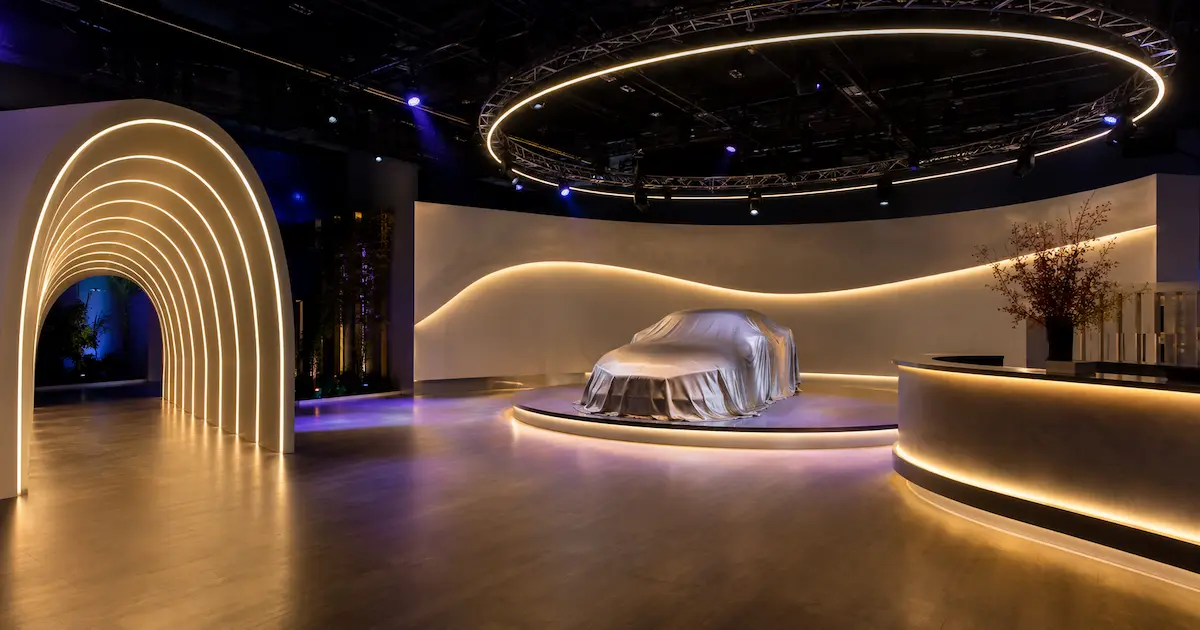
Here’s the deal: the demand is driven by both creative and commercial pressure. A luxury hotel gala may need a warm, continuous glow along a curved reception desk. A car launch may need dynamic RGBW lines following the vehicle shape. A concert set may need fast replacement sections if a module is damaged during transport. Flexible LED profiles answer these needs with a mix of bend radius, diffusion, and protective housing.
We often see installers struggle with loose LED strips on curved surfaces. Adhesive alone fails under heat, dust, and handling. A flexible profile gives the strip a controlled path and shields it from impact.
| Event Application | Why Flexible Profiles Help | Typical Requirement |
|---|---|---|
| Curved scenic panels | Smooth outline without cutting rigid channels | Side-bend or top-bend profile |
| Brand activation booths | Fast installation and repeatable shapes | Pre-cut lengths with leads |
| Temporary outdoor events | Better strip protection | IP65 to IP67 housing |
| Immersive tunnels | Long continuous light lines | 24V or 48V system planning |
| Product displays | Uniform soft glow | COB strip or dense SMD strip |
2. What Makes a Flexible LED Profile Different from a Standard LED Channel?
A standard LED channel is usually rigid aluminum with a snap-in diffuser. It works well for straight lines, cabinetry, shelves, commercial ceilings, and fixed architectural details. A flexible LED profile is made to bend, twist within limits, or follow a curve while still protecting the strip and diffusing light.
The profile material matters. Silicone profiles offer excellent flexibility and water resistance. Flexible PVC can lower cost, but it may not handle heat or UV exposure as well. Some bendable aluminium profiles use segmented structures or thin-wall designs, giving better thermal performance than silicone but less freedom in shape, so buyers should work with an experienced aluminium LED profile manufacturer that can provide bending data, drawings, diffuser options, and sample support.
This is where it gets interesting. The profile is only one part of the system. Strip density, PCB width, LED package, diffuser depth, and power all affect visible dotting. In our lab tests using integrating spheres, we compare lumen output before and after diffusion because some milky silicone lenses can reduce visible output by 20% to 45%, depending on thickness and LED type.
| Profile Type | Bend Direction | Strength | Heat Handling | Best Use |
|---|---|---|---|---|
| Silicone neon profile | Top or side bend | Good impact resistance | Medium | Curves, logos, outlines |
| Flexible PVC profile | Top bend | Medium | Low to medium | Budget indoor scenery |
| Bendable aluminum profile | Limited curve | Strong | Better | Semi-permanent venue installs |
| Rigid aluminum channel | Straight line | Strong | Best | Fixed linear runs |
3. Are Flexible LED Profiles Better Than Traditional Event Fixtures?
Flexible LED profiles are not “better” in every case. They serve a different role. Moving heads create beams, wash fixtures cover large areas, and pixel bars deliver dynamic effects. Flexible LED profiles create clean lines, soft accents, edge lighting, and shape-based visual language.
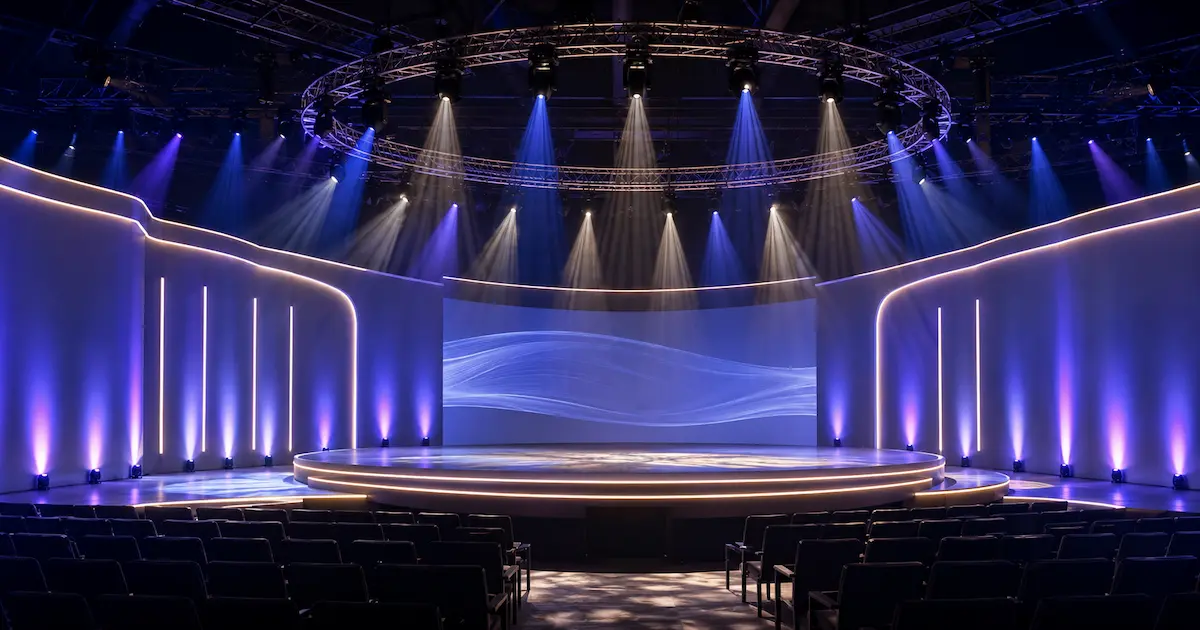
For a corporate keynote or trade-show activation, profiles can frame speaker walls and branded structures with subtle linear light, following many of the same planning principles used for LED strip lights in exhibition booths. For a fashion show, flexible profiles can outline runway curves without blocking sightlines. For a nightclub pop-up, pixel-controlled flexible neon can create animated patterns on ceiling ribs.
But there’s a catch. Flexible profiles usually have lower peak intensity than dedicated show fixtures. They also need good planning for power injection, signal runs, and mounting. If the design needs high-output beam effects, flexible profiles should support the concept rather than carry the whole show.
| Lighting Tool | Main Strength | Weak Point | Best Fit |
|---|---|---|---|
| Flexible LED profiles | Clean curved lines | Needs careful power layout | Scenic outlines, brand sets |
| Moving heads | Motion and beam effects | Higher cost and rigging load | Concerts, main visual moments |
| LED pixel bars | Dynamic linear animation | Usually rigid shape | Media sets, DJ booths |
| Wash lights | Area coverage | Less shape detail | Walls, crowds, background |
| Rigid linear lights | Straight architecture | Poor for curves | Truss lines, straight features |
The future is not one product replacing all others. It is mixed systems. Flexible profiles will likely take a larger share of scenic and architectural event lighting because they reduce custom fabrication and give designers more shape freedom. The following neutral live-production tutorial explains how stage fixtures, trussing, DMX control, and power cabling work together within a complete event-lighting system.
4. Which Technical Specs Decide Performance and Reliability?
The buying decision should start with specs, not photos. A product may look good in a showroom, then fail at the venue because the strip overheats, the color shifts, or the power supply is undersized.
Pay attention to bend radius. If a profile has a minimum bend radius of 80 mm, forcing it into a 40 mm curve can crack the diffuser or lift the LED strip. Check cut intervals too. A 24V strip may cut every 50 mm or 100 mm, which affects how closely it fits custom shapes. For RGBW or SPI pixel systems, cable type and controller limits also matter.
Thermal behavior is another key point. Silicone protects the strip, but it also traps heat. High wattage inside a sealed profile can shorten lifetime, so project teams should compare which flexible LED profiles offer the best heat management for LEDs before building rental systems intended for repeated full-output operation. Our Chief Engineer notes that heat dissipation is often ignored in event work because projects are temporary, yet repeated rental use can age LEDs quickly if the system runs hot night after night.
| Spec | Typical Range | Why It Matters |
|---|---|---|
| Input voltage | 12V, 24V, 48V | Affects run length and voltage drop |
| Power density | 6W/m to 20W/m | Controls brightness and heat |
| Bend radius | 50mm to 150mm | Sets safe curve limits |
| CCT tolerance | 3-step or 5-step SDCM | Reduces visible mismatch |
| CRI | 80, 90, 95+ | Affects skin tones and product colors |
| IP rating | IP20 to IP67 | Matches indoor, damp, or outdoor use |
5. How Do Voltage, Drivers, and Controls Affect Event Results?
Power planning can make or break a flexible LED profile project. Long runs are common in events, and long low-voltage runs suffer from voltage drop. The visible result is a line that starts bright and ends dull or color-shifted.
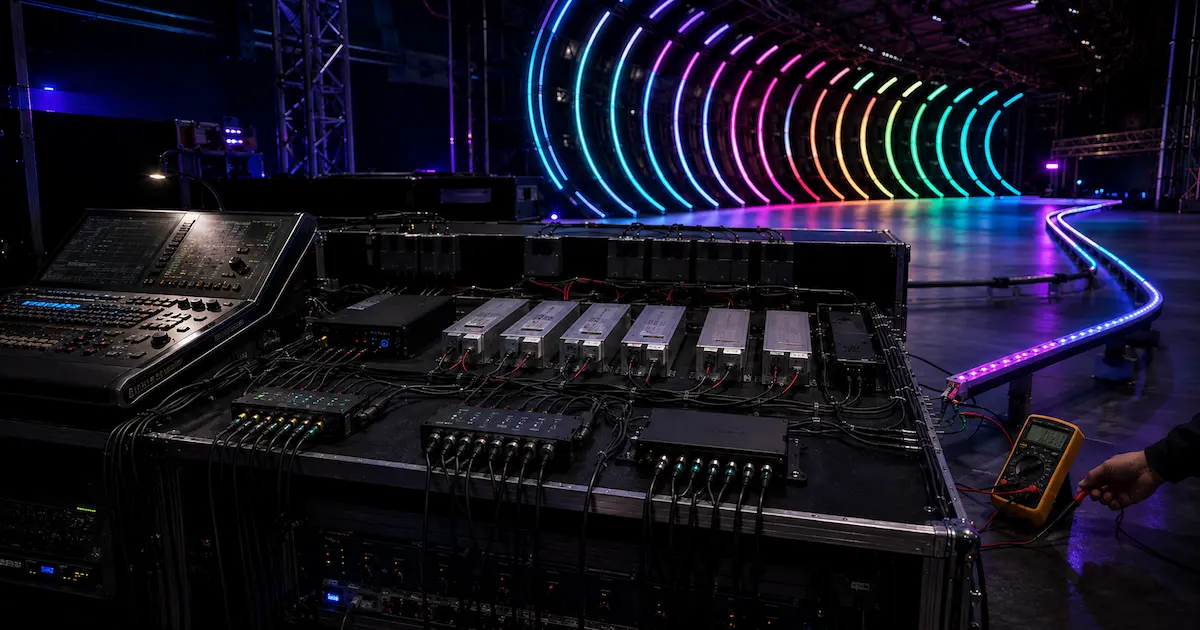
When we tested this against a standard 12V strip, the 12V version showed faster brightness loss over a long run than a comparable 24V design. For many event applications, 24V is the safer default. For very long architectural outlines, 48V can reduce current and cable size, though driver and controller choice becomes more specific.
Control type matters too. Static white can use simple dimming. RGBW needs multi-channel control. Pixel effects need SPI data, addressable IC compatibility, and backup plans for signal failure. DMX decoders are common in event venues because lighting desks use the industry-standard DMX512 lighting-control protocol to transmit control data to compatible fixtures, decoders, and accessories.
| System Choice | Pros | Cons | Best Application |
|---|---|---|---|
| 12V | Short sections, easy sourcing | More voltage drop | Small props, short signs |
| 24V | Balanced run length and availability | Still needs injection on long runs | Most event profiles |
| 48V | Lower current on long runs | Fewer component options | Long venue outlines |
| Constant voltage dimming | Simple and reliable | Limited effects | Warm white scenic lines |
| SPI pixel control | Rich animation | More testing needed | Dynamic media-style sets |
Pro Tip from the VST Technical Team: Always test the full run length at the planned brightness level. A 2-meter bench sample does not reveal what happens on a 20-meter curved installation.
6. Can Flexible LED Profiles Handle Outdoor and Rental Event Conditions?
Outdoor events and rental inventory are harsh environments. Rain, dust, UV exposure, repeated packing, cable pulling, and rushed load-out all punish lighting products. Flexible LED profiles can handle these conditions if the design matches the use case.
The official ingress protection IP ratings guide is a useful starting point for classifying resistance to dust and water, but event teams must separately assess field-cut ends, cable exits, connectors, UV exposure, handling damage, and condensation. IP65 resists water jets and dust. IP67 can handle temporary immersion under defined test conditions. Yet end caps, cable exits, solder joints, and cut points are common failure areas. A profile may be rated IP67 before cutting, then become weak after field modification.
For a city festival, pre-sealed lengths with molded or properly sealed cable exits are safer than cutting on-site. For a hotel courtyard event, UV-resistant silicone helps prevent yellowing. For rental companies, reinforced cases and labeled cable sets reduce handling damage.
| Environment | Recommended Protection | Common Risk | Practical Fix |
|---|---|---|---|
| Indoor ballroom | IP20 to IP44 | Dust and handling | Profile clips and strain relief |
| Covered outdoor tent | IP65 | Condensation | Sealed ends and drip loops |
| Open outdoor event | IP67 | Rain at cable exits | Factory-sealed leads |
| Rental warehouse | Impact resistance | Diffuser dents | Protective reels or cases |
| Coastal venue | Corrosion risk | Salt air | Check cable and connector material |
A field example: we once saw an outdoor arch fail because the strip was IP67, but the connector was not. The weak point was not the profile. It was the accessory.
7. What Are the Common Misconceptions About Flexible LED Profiles?
Common Myth: Higher wattage always means better brightness. Reality: brightness depends on lumen efficiency, diffuser loss, thermal control, LED density, and viewing distance. A 14W/m strip with better LEDs and a suitable diffuser can look cleaner than a 20W/m strip trapped inside a hot silicone tube.
Another myth says flexible profiles remove the need for thermal planning. They don’t. Silicone and PVC profiles can protect the strip from touch and moisture, but they often dissipate heat less effectively than aluminum. If the profile runs at full output for long hours, heat testing matters, and ENERGY STAR’s guidance to learn about LED lighting explains why effective heat sinks and thermal paths are essential to preventing rapid lumen degradation and shortened operating life.
A third myth says any bendable profile can make any shape. Direction matters. A top-bend profile may not handle side curves. A side-bend profile may not fit a vertical wave. For logo work, designers need to match bend direction with drawing geometry.
Here’s a quick check we use during project review:
| Misconception | Real Check | Business Risk if Ignored |
|---|---|---|
| More watts means better result | Compare lumens after diffusion | Higher power cost and early failure |
| IP rating covers all parts | Check end caps and connectors | Water ingress and callbacks |
| Any profile bends any way | Verify bend direction | Broken profile or uneven shape |
| Adhesive is enough | Use clips or channels | Falling strips during event |
| Sample color equals batch color | Ask for binning control | Visible mismatch across sets |
This matters to your bottom line because wrong assumptions lead to rework, extra labor, and client complaints after the design is already built.
8. How Should Event Teams Specify Flexible LED Profiles for Projects?
A good specification saves time before quotation and prevents confusion during installation, so buyers should review the available LED lighting product details for profile dimensions, strip compatibility, voltage, diffuser type, IP rating, cable exits, and accessories. Start with the design intent: outline, accent, pixel animation, indirect glow, or task lighting. Then define the length, curve radius, environment, brightness level, color quality, and control method.
For a luxury brand booth, you may need 2700K or 3000K with CRI90+ and tight SDCM control. For a music festival sign, RGB or RGBW may matter more than CRI. For a museum opening, silent flicker-free dimming can be required because cameras will be recording.
We recommend listing the following in every project brief:
| Specification Item | Example Value | Why It Helps |
|---|---|---|
| Profile model | Side-bend silicone, 16x16mm | Matches shape direction |
| Strip type | COB 24V, 10W/m, CRI90 | Controls dot-free appearance |
| Color | 3000K, 3-step SDCM | Keeps uniformity |
| Lengths | 2.4m, 3.2m, 5m custom | Reduces on-site cutting |
| Cable exit | Left end, 1m lead | Speeds installation |
| Driver | 24V, 150W, dimmable | Matches load and control |
| Control | DMX decoder or SPI controller | Fits venue system |
From our manufacturing floor perspective, custom pre-soldered leads often save more labor than buyers expect. If ten scenic pieces each need two solder joints on-site, factory preparation can reduce errors and setup time.
9. What Installation Practices Reduce Failure During Live Events?
Installation quality decides whether flexible LED profiles perform like a premium system or a rushed decoration, so event teams should follow recognised temporary power safety practices when planning distribution equipment, connected loads, cable protection, grounding, and environmental suitability. The profile should not carry cable tension. Use strain relief at every cable exit. Avoid sharp bends near solder pads. Keep drivers ventilated, and avoid burying power supplies in sealed scenic boxes.
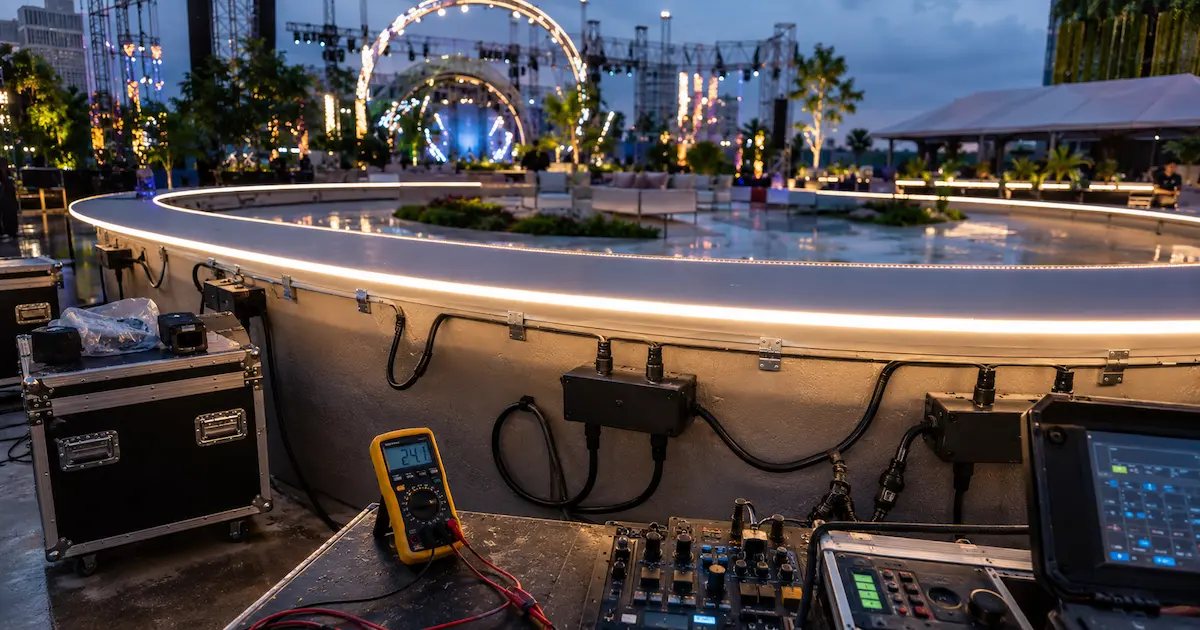
We often see installers struggle with last-minute cuts. Cutting a sealed profile at the venue can be done, but it demands the right sealant, drying time, and inspection. During a live event schedule, those conditions are rarely ideal. Pre-cut, pre-sealed sections are safer for high-profile work.
Use this checklist before load-in:
| Checkpoint | Pass Standard | Failure Sign | Fix |
|---|---|---|---|
| Bend radius | Meets datasheet limit | Wrinkles or cracks | Increase curve size |
| Power load | Driver at 80% or lower load | Driver overheating | Use higher capacity or split load |
| Voltage drop | End brightness acceptable | Dim or color-shifted end | Add power injection |
| Mounting | Clips spaced evenly | Sagging profile | Add clips or backing rail |
| Signal test | All channels respond | Flicker or wrong color | Check decoder address and wiring |
| Waterproofing | End caps sealed | Moisture marks | Re-seal or replace section |
A practical example: for a 30-meter venue outline, split the run into shorter powered sections rather than feeding from one end. It reduces current stress and keeps brightness consistent.
10. Are Flexible LED Profiles the Future, or Just a Trend?
Flexible LED profiles are more than a short-term style trend because they solve repeatable business problems: shape freedom, cleaner diffusion, faster scenic fabrication, safer strip protection, and easier branding. However, they are not a universal answer. The strongest event lighting designs will combine flexible profiles with rigid fixtures, smart controls, and solid power planning.
For distributors and contractors, the future value sits in complete kits, not loose parts. A kit may include profile, LED strip, end caps, clips, drivers, wiring diagrams, controller settings, and spare sections. That format reduces support calls and helps local installation teams work faster.
For event designers, flexible profiles open clean design options such as flexible LED profiles for circular ceiling lighting, glowing product paths, circular DJ booths, branded logo strokes, and camera-friendly backgrounds. For venue owners, they can also become semi-permanent architectural features that remain after the event.
The real story is this: flexible LED profiles will grow because clients want custom-looking light without custom-building every component from scratch. The winners will be teams that treat them as engineered assemblies with verified optics, heat control, safe wiring, and documented installation methods.
Conclusion
Flexible LED profiles are a practical future direction for event lighting when specified as complete engineered assemblies—match bend direction, IP rating, voltage, diffusion, thermal plan, and controls before build. For help with bend direction, voltage drop, driver loading, DMX or SPI control, waterproofing, and custom cable preparation, contact our engineering team and send the event drawings for a manual configuration review.
FAQ
Q1: What are flexible LED profiles?
Flexible LED profiles are bendable housings for LED strips. They protect the strip, improve diffusion, and allow curved or shaped light lines in event sets, signage, and architectural features.
Q2: Are flexible LED profiles suitable for outdoor events?
Yes, if the IP rating, end caps, cable exits, and connectors match the outdoor condition. For rain exposure, factory-sealed IP65 or IP67 assemblies are safer than field-cut sections.
Q3: Do flexible LED profiles replace moving head lights?
No. They are best for outlines, accents, and scenic shapes. Moving heads still handle beams, motion, and high-output effects. Most strong event designs use both.
Q4: Is 12V or 24V better for flexible LED profiles?
For most event runs, 24V is preferred because it reduces voltage drop compared with 12V. Short props can use 12V, while long outlines may need 48V or power injection.
Q5: How can I avoid visible dots in flexible LED profiles?
Use dense SMD or COB strips, choose a diffuser with enough depth, test brightness after diffusion, and keep the viewing distance in mind. A sample test is the safest way to confirm appearance.
