
LED strip lighting provides versatile illumination for commercial and residential spaces, but their effectiveness relies heavily on proper concealment. When visible, LED strips create distracting bright spots and undermine the professional aesthetic of any installation. This comprehensive guide addresses professional techniques for hiding LED strips and their components to create seamless, elegant lighting effects for your commercial clients.
For B2B lighting professionals, understanding advanced concealment techniques isn’t just about aesthetics—it directly impacts client satisfaction, project durability, and professional reputation. Proper concealment methods enhance lighting effects while protecting the LED components for longer operational life.
1. Why Should LED Strip Lights Be Hidden in Professional Installations?

Client Perception and Aesthetic Quality
Visible LED strip lights create a distinctly unprofessional appearance that sophisticated clients immediately recognize. Commercial environments demand polished installations where only the light effect is visible, not the source itself. Hidden installations demonstrate attention to detail and technical expertise that elevates your company’s standing in the competitive lighting industry.
Glare Prevention and Visual Comfort
Direct view of LED diodes causes significant glare and visual discomfort for occupants. In commercial spaces like offices, retail environments, and hospitality settings, this can negatively impact customer experience and employee productivity. Properly concealed LED strips distribute light more evenly and reduce harsh glare that interferes with workspace functionality.
Component Protection and Longevity
Concealing LED strips within appropriate channels or architectural features provides physical protection against dust, accidental damage, and environmental factors. This protection significantly extends component lifespan and reduces maintenance requirements, improving your project’s long-term value proposition.
| Installation Type | Visible LED Strips | Concealed LED Strips |
| Commercial Office | Unprofessional appearance, distracting to workers | Refined aesthetic, improved workspace comfort |
| Retail Environment | Diminishes product focus, creates harsh spots | Enhances merchandise, creates inviting atmosphere |
| Hospitality Spaces | Reduces perceived quality, appears unfinished | Elevates ambiance, suggests luxury and attention to detail |
| Component Lifespan | Exposed to damage, dust accumulation, reduced lifespan | Protected from environmental factors, extended operational life |
2. How to Select the Right Architectural Integration Approach?
Cove Lighting Implementation
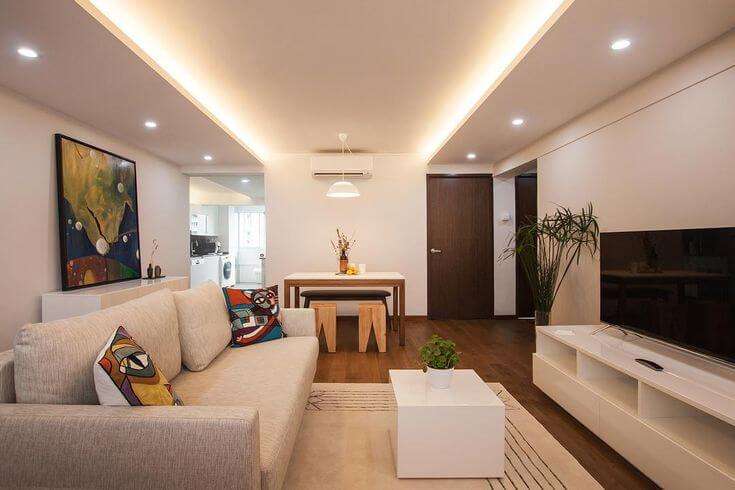
Cove lighting remains one of the most effective methods for concealing LED strips in commercial spaces. This technique utilizes the architectural structure of ceiling perimeters, soffits, or ledges to hide strips while directing light upward or outward. The result is soft, indirect illumination that enhances spatial dimensions without revealing the light source.
Professional Tip: For commercial cove installations, position strips at least 15-20cm from the wall to prevent hotspots and ensure even light distribution across the ceiling surface. Use high-density strips (120+ LEDs/meter) for commercial applications to eliminate spotting effects.
Recessed Channel Systems
Creating recessed channels in walls, ceilings, or custom millwork provides a sophisticated concealment method for high-end commercial projects. These channels can be designed with various depths and widths to accommodate different strip types, drivers, and wiring components. This approach requires coordination with contractors during construction or renovation phases.
For retrofit applications in existing commercial spaces, surface-mounted channels with integrated recessed areas can achieve a similar effect without requiring extensive construction modifications.
Crown Molding and Architectural Detail Integration
Specialized crown molding designed for LED integration offers a practical solution for many commercial environments. These moldings feature hidden recesses for strip placement that direct light while completely concealing the LED components. This approach works particularly well in hospitality settings, conference rooms, and executive offices where traditional architectural details enhance the overall design scheme.
Important Consideration: When integrating LED strips into architectural details, always account for heat dissipation requirements. Confined spaces can trap heat, potentially reducing LED lifespan. Specify aluminum channels or heat-dissipating mounting surfaces for enclosed installations.
3. What Professional Mounting Systems Conceal LED Strips Most Effectively?

Aluminum Profile Selection and Application
Aluminum profiles represent the industry standard for professional LED strip concealment. These extruded channels not only hide the strips from direct view but also provide crucial heat dissipation, extending component life in demanding commercial applications. The variety of profile designs available allows for tailored solutions to specific architectural requirements.
| Profile Type | Application | Concealment Effectiveness | Installation Complexity |
| Surface Mount | Wall/ceiling applications, under cabinets | Good – requires strategic placement | Low – direct mounting with screws or adhesive |
| Recessed | Integrated into millwork, walls, ceilings | Excellent – completely hidden | High – requires precise cutting and preparation |
| Corner Mount | Wall-ceiling junctions, shelf corners | Very good – utilizes natural concealment points | Medium – requires proper alignment at corners |
| Stair/Step | Commercial stairs, level changes, display shelving | Excellent – integrated into architectural transitions | Medium to high – requires coordination with builders |
Diffuser Selection for Optimal Light Quality
The diffuser component of aluminum profiles plays a crucial role in both concealing the individual LED diodes and ensuring professional-quality light distribution. Different diffuser types produce distinct lighting effects that should be selected based on the specific commercial application.
For retail and hospitality environments where ambiance is critical, opal diffusers providing 30-50% light transmission create soft, even illumination without visible LED spotting. Clear or semi-clear diffusers may be appropriate for task lighting applications where maximum brightness is required, such as under-cabinet installations in commercial kitchens.
Custom Integration Techniques for Challenging Spaces
Commercial projects often present unique architectural challenges that require customized concealment solutions. For irregular surfaces or curved architectural elements, flexible aluminum channels or specialized mounting systems may be necessary.
In historic buildings or renovation projects where structural modifications are limited, surface-mounted systems with minimal profiles and precisely directed light can create effective concealment without requiring substantial architectural alterations.
Professional Tip: For curved applications, use specialized bendable aluminum profiles that maintain proper LED strip alignment and heat dissipation while conforming to architectural curves. These profiles typically require a minimum bending radius of 50cm or greater, depending on profile dimensions.
4. How Does Power Supply Placement Impact LED Strip Concealment?
Strategic Driver Placement for Commercial Installations
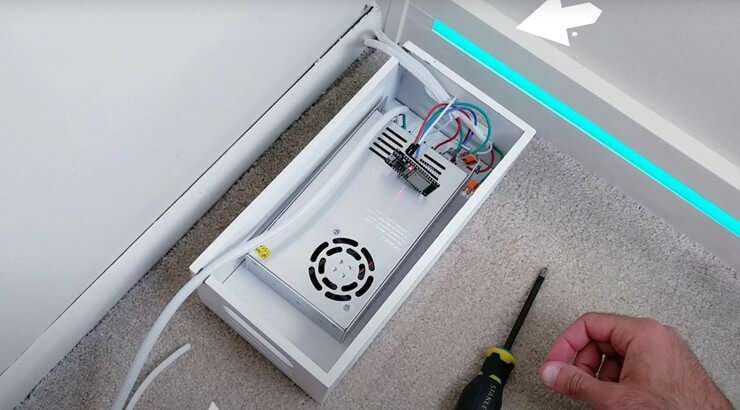
Power supply (driver) concealment represents one of the most challenging aspects of professional LED strip installations. Unlike the strips themselves, drivers are bulkier components that require specific placement considerations for both aesthetics and functionality.
In commercial applications, remote driver placement is often preferable, allowing the power supply to be located in accessible service areas while keeping the visible lighting elements clean and minimalist. Common remote placement locations include:
- Above suspended ceilings with access panels for maintenance
- Within dedicated electrical closets or service areas
- Behind removable architectural panels or access doors
- Within junction boxes integrated into millwork or cabinetry
- Inside ventilated enclosures specifically designed for driver housing
Critical Consideration: Always account for voltage drop when planning remote driver placement. For 12V systems, keep wire runs under 5 meters between driver and LED strips to prevent brightness reduction. For 24V systems, this distance can be extended to approximately 10 meters before significant voltage drop occurs.
Wiring Concealment Techniques
Professional installations require complete concealment of all wiring components. Several approaches can be utilized depending on the specific commercial environment:
- Architectural Integration: Route wiring through wall cavities, ceiling voids, or within millwork during construction/renovation phases.
- Conduit Systems: Use low-profile surface conduits color-matched to surrounding surfaces for retrofit applications.
- Cable Management Channels: Install dedicated wire management systems designed to blend with architectural elements.
- Junction Box Integration: Utilize code-compliant junction boxes at transition points between fixed wiring and LED components.
When planning wiring routes, consider future maintenance requirements and ensure that critical connection points remain accessible without requiring extensive disassembly of architectural elements.
Multiple Zone Power Distribution
For extensive commercial installations covering multiple areas or lighting zones, centralized power distribution systems may be appropriate. These systems allow for multiple LED strips to be powered from a single location, simplifying driver concealment while maintaining proper power delivery to all components.
Power distribution blocks, when properly concealed in service areas, provide an elegant solution for complex commercial applications with multiple LED strips operating in different zones or controlled by separate systems.
5. What Specialized Techniques Work for Different Commercial Environments?
Retail Display Integration
Retail environments benefit from specialized LED strip concealment techniques that enhance product visibility while maintaining a clean, professional appearance. Key approaches include:
- Shelf Edge Integration: Recessed channels along shelf edges direct light onto products while concealing strips from customer view.
- Display Case Lighting: Hidden strips within case framing or specialized extrusions provide even illumination without visible light sources.
- Valance/Soffit Concealment: Architectural elements above display areas house LED strips for downlighting that highlights merchandise.
Retail-Specific Tip: For jewelry or high-value product displays, specify high CRI (95+) LEDs with specialized aluminum profiles featuring louver diffusers that direct light precisely onto products while eliminating direct view of the light source.
Office and Commercial Space Solutions
Corporate environments require discreet lighting that enhances workspace functionality while maintaining professional aesthetics. Effective approaches include:
- Architectural Soffits: Integrate strips into ceiling perimeter details for indirect uplighting that eliminates glare on computer screens.
- Workstation Integration: Conceal task lighting strips beneath overhead storage or within furniture elements using specialized mounting channels.
- Conference Room Perimeters: Install strips in ceiling coves or wall recesses that provide ambient lighting while remaining hidden from direct view.
Hospitality and Entertainment Venue Techniques
These environments demand more dramatic lighting effects while maintaining sophisticated concealment. Specialized approaches include:
- Floating Ceiling Elements: Create suspended ceiling features with hidden LED strips around perimeters for floating illumination effects.
- Wall Washing Techniques: Install strips in wall-adjacent floor channels or ceiling tracks that project light across wall surfaces without revealing the source.
- Banquette/Seating Integration: Conceal strips beneath seating elements or within custom millwork to create ambient effects and wayfinding illumination.
6. How to Conceal LED Strips in Challenging Environments?
Moisture-Resistant Installation Methods
Commercial environments with moisture concerns (restrooms, food service areas, spa facilities) require specialized concealment techniques that maintain both water resistance and easy maintenance access. IP-rated channels and sealed mounting systems provide protection while maintaining clean architectural lines.
For environments with direct water exposure, completely sealed IP68-rated enclosures combined with waterproof LED strips create durable, concealed lighting systems. These enclosures must be installed with proper drainage considerations to prevent water accumulation around electrical components.
High-Temperature Area Considerations
Areas with elevated ambient temperatures (commercial kitchens, industrial settings, exterior installations with direct sun exposure) require enhanced heat dissipation to prevent premature LED failure. Specialized high-dissipation aluminum profiles with increased surface area and thermal management features maintain component longevity while providing effective concealment.
Critical Note: For high-temperature applications, always specify aluminum profiles with thermal dissipation capacity appropriate for the environment. Standard profiles may be insufficient in these conditions, leading to reduced component life despite proper concealment.
Exterior and Landscape Integration
Commercial exterior applications present unique concealment challenges due to environmental exposure and visibility conditions. Effective approaches include:
- Architectural Reveal Integration: Utilize building facade reveals or structural transitions to house weather-resistant LED strip systems.
- Hardscape Element Incorporation: Integrate strips into purpose-built channels within steps, retaining walls, or paved elements.
- Landscape Feature Mounting: Conceal strips within specialized landscape fixtures that blend with plantings while providing proper protection.
7. What Tools and Equipment Ensure Professional Concealment?
Essential Installation Tools
Professional-grade concealment requires precision tools that ensure clean, accurate mounting and integration. Key tools include:
| Tool Type | Application | Importance for Concealment |
| Aluminum Miter Saw | Precise cutting of aluminum profiles | Critical – ensures flush joints and clean transitions |
| Channel Router Bits | Creating custom recesses in millwork | Important for custom integrations in built-in elements |
| Laser Measurement Tools | Precise alignment of concealment systems | High – ensures even spacing and professional appearance |
| Soldering Equipment | Creating custom connections for challenging installations | Medium – allows customization where standard connectors won’t fit |
| Wire Management Tools | Clean routing and securing of power connections | Very high – prevents visible wiring that compromises concealment |
Specialized Mounting Accessories
Beyond the basic aluminum profiles, several specialized accessories enhance concealment capabilities for professional installations:
- End Caps and Corner Connectors: Create seamless transitions between profile segments while maintaining complete LED concealment.
- Adjustable Mounting Brackets: Allow precise positioning of profiles for optimal light direction while keeping strips hidden from view.
- Surface-Specific Mounting Clips: Provide secure attachment to various materials while maintaining clean lines and concealment.
- Wiring Glands and Waterproof Entry Points: Enable clean power connections that maintain water resistance in specialized applications.
Testing and Verification Equipment
Professional installations require verification that concealment methods function as intended under various conditions. Key testing equipment includes:
- Light Meters: Verify that concealment methods don’t excessively reduce light output or create uneven distribution.
- Thermal Imaging Cameras: Ensure that concealment doesn’t create heat buildup that could damage components.
- Voltage/Current Testers: Confirm proper electrical operation after concealment installation is complete.
- Mock-up Test Fixtures: Create sample installations to verify concealment effectiveness before full-scale implementation.
8. How to Document Concealed Installations for Future Maintenance?
Creating Comprehensive As-Built Documentation
Properly concealed LED installations can present challenges for future maintenance if installation details aren’t thoroughly documented. Professional B2B installers should provide detailed as-built documentation that includes:
- Precise Location Mapping: Detailed drawings showing exact placement of all concealed components.
- Access Point Identification: Clear marking of all service access locations for drivers, controllers, and connection points.
- Component Specifications: Comprehensive listing of all installed items with model numbers and replacement information.
- Concealment Method Details: Specific documentation of channels, profiles, and mounting systems used throughout the installation.
Access Planning for Future Service
Even the most effectively concealed installation will eventually require maintenance or component replacement. Professional designers should incorporate planned access points that maintain aesthetic integrity while allowing for necessary service.
For commercial installations, consider incorporating removable architectural elements, access panels, or service points that blend with the overall design while providing necessary maintenance capabilities.
Professional Best Practice: Create a maintenance map that details the location of all power supplies, controllers, and junction points within concealed installations. Include specific access instructions and any special tools required for service access. This documentation should be provided to facility management personnel upon project completion.
9. What Advanced Techniques Create Superior Concealment Effects?

Layered Lighting Approaches
The most sophisticated concealment techniques often incorporate layered lighting approaches that use multiple concealed LED strip installations working in concert. This strategy not only enhances the overall lighting effect but also ensures that no single light source appears too prominent or reveals its origin.
Commercial environments benefit from combined concealment techniques such as:
- Perimeter Cove + Mid-Room Architectural Features: Combine ceiling perimeter concealment with integrated lighting in central design elements.
- Wall-Wash + Targeted Accent Lighting: Layer concealed wall grazing strips with hidden accent lighting that highlights specific architectural or design features.
- Furniture Integration + Environmental Lighting: Coordinate concealed strips within furnishings with architectural lighting elements for cohesive effects.
Color Coordination for Visual Concealment
Beyond physical concealment, visual integration techniques can further enhance the professional appearance of LED strip installations. Coordinate profile finishes, mounting hardware, and even the PCB color of the LED strips themselves with surrounding architectural finishes.
For example, in dark ceiling environments, black aluminum profiles and dark PCB LED strips significantly reduce visibility even when directly viewed. Conversely, white profiles and components blend seamlessly with light-colored architectural surfaces.
Programmable Systems for Dynamic Concealment
Advanced programmable LED systems offer unique concealment advantages through dynamic control. By varying brightness levels, color temperatures, or RGB values across different concealed zones, these systems can create lighting effects where the source appears to shift or change, further disguising the fixed location of the physical LED strips.
This method works especially well in commercial settings such as hospitality venues, retail spaces, and corporate lobbies, where refined lighting effects can elevate brand identity and enrich the customer experience.
10. What Maintenance Ensures Long-Term Concealment Success?

Regular Inspection Protocols
Maintaining effective concealment requires regular inspection of all system components. Establish maintenance schedules that include:
- Visual Inspection: Check for any shifting of profiles, diffusers, or mounting hardware that might expose LED components.
- Diffuser Cleaning: Remove and clean diffusers to maintain optimal light quality and prevent dust buildup that could affect thermal performance.
- Hardware Tightening: Verify that all mounting hardware remains secure, preventing sagging or displacement that could compromise concealment.
- Connection Verification: Ensure all electrical connections remain secure and protected within concealment systems.
Replacement Strategies for Concealed Components
When components require replacement, maintaining the integrity of concealment systems presents unique challenges. Develop replacement strategies that:
- Preserve Architectural Elements: Use methods that don’t damage surrounding finishes or structures when accessing concealed components.
- Maintain System Integrity: Ensure replacement components match original specifications for seamless reintegration into concealment systems.
- Document All Changes: Update as-built documentation to reflect any modifications made during maintenance operations.
Important Consideration: When specifying LED strip systems for commercial applications with sophisticated concealment, select products with long-term availability of replacement components. Proprietary systems may present significant challenges if components become unavailable when future service is required.
Conclusion
Professional LED strip concealment represents a critical aspect of commercial lighting design that directly impacts both aesthetic outcomes and functional performance. By implementing architectural integration techniques, utilizing appropriate mounting systems, and carefully planning component placement, B2B lighting professionals can deliver superior installations that maintain their quality and appearance throughout their operational life.
The most successful concealment approaches consider not only initial installation aesthetics but also long-term maintenance requirements, environmental factors, and specific client needs. By incorporating these comprehensive strategies, lighting professionals can differentiate their services in the competitive commercial lighting market while delivering exceptional value to clients.
For commercial applications where lighting directly influences customer experience, employee productivity, or brand perception, proper LED strip concealment isn’t merely a technical detail—it’s an essential component of successful lighting design that demonstrates true professional expertise.
FAQ Section
Q1: What is the most effective method for hiding LED strips in commercial office environments?
For commercial office environments, architectural cove lighting provides the most effective concealment while delivering functional illumination. This approach utilizes ceiling perimeters or soffits to completely hide LED strips while directing light upward for indirect ambient lighting. The technique reduces glare on computer screens and creates a professional atmosphere without visible light sources. For optimal results, specify high-quality aluminum channels with opal diffusers and position strips at least 15-20cm from walls to prevent hotspots. This method also allows for easy integration with building management systems and programmable controls commonly required in commercial office applications.
Q2: How can power supplies be effectively concealed in commercial LED strip installations?
Effective power supply concealment in commercial installations requires strategic placement that balances accessibility, ventilation, and aesthetics. The most professional approach typically involves remote placement in dedicated electrical closets, above suspended ceilings with access panels, or within ventilated enclosures integrated into millwork. For projects without these options, junction boxes recessed into wall cavities provide code-compliant concealment. Always consider heat dissipation requirements when concealing drivers, allowing sufficient ventilation space (minimum 10cm clearance around all sides) to prevent overheating. For installations requiring multiple power supplies, centralized power distribution systems with single-point access simplify maintenance while maintaining complete concealment of components.
Q3: What are the key considerations when selecting aluminum profiles for LED strip concealment?
When selecting aluminum profiles for professional LED strip concealment, evaluate several critical factors: heat dissipation capacity (look for profiles with thermal management features appropriate for your specific application); diffuser options (opal diffusers with 30-50% light transmission typically provide the most professional appearance for commercial applications); mounting versatility (select profiles with multiple mounting options to accommodate various architectural situations); and size appropriateness (ensure the profile dimensions properly accommodate the LED strip width and provide adequate depth for heat dissipation). For commercial applications, specify profiles with higher-grade aluminum alloys (6063-T5 or better) that offer superior durability and heat transfer properties compared to economy profiles often used in residential applications.
Q4: How can LED strips be effectively concealed in retail display applications?
Retail display concealment requires specialized techniques that enhance product visibility while hiding light sources. The most effective methods include integrating strips into custom millwork with recessed channels that direct light onto merchandise while concealing components from customer sight lines; utilizing specialized shelf-edge profiles that illuminate products from concealed positions within display structures; and implementing strategic backlighting through diffused panels that create even illumination without visible light sources. For maximum effectiveness, coordinate concealment approaches with store fixture manufacturers during design phases, allowing for integrated wire routing and driver placement that maintains clean visual presentations. Always specify high CRI (90+) LEDs for retail applications to ensure accurate product color rendering despite the concealed installation approach.
Q5: What documentation should be provided to clients for professionally concealed LED strip installations?
Professional documentation for concealed LED installations should include comprehensive as-built drawings showing exact placement of all LED strips, power supplies, controllers, and connection points; detailed access instructions for all concealed components requiring potential maintenance; complete component specifications with model numbers and replacement information; electrical diagrams indicating circuit layouts and load calculations; warranty documentation specific to the concealment methods used; and maintenance guidelines outlining inspection schedules and cleaning procedures for concealment components. For sophisticated commercial installations, consider providing digital documentation using building information modeling (BIM) formats that integrate with facility management systems, allowing maintenance personnel to precisely locate all concealed components despite their invisible installation.
