
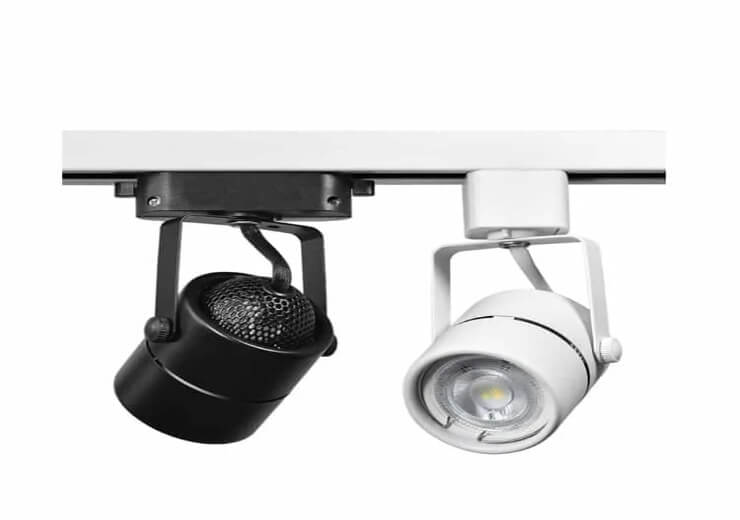

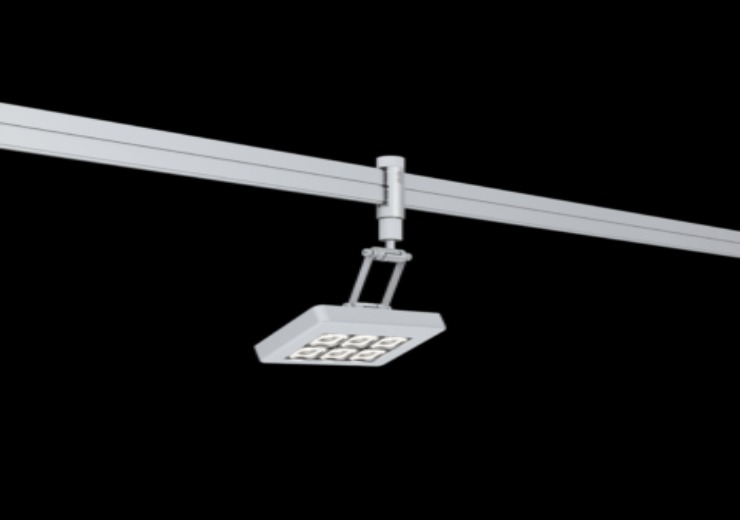
A high-quality driver is the core of every low profile LED lighting system, and VST places strong emphasis on this critical engineering component. Each of our low profile led lights is powered by a premium constant-current driver that delivers stable output, protects against voltage fluctuations, and provides flicker-free illumination for long-term visual comfort and dependable performance. Designed for flexibility, the drivers integrated into our led low profile track lighting, low profile track lighting led, and low profile led mini track light solutions support TRIAC, 0–10V, and DALI dimming, allowing smooth and accurate brightness adjustment across diverse applications. For specialized projects, VST’s R&D team fine-tunes driver performance to meet specific load demands, dimming curves, and installation requirements, ensuring consistent reliability in every low profile track led light system.
LED Track Lighting Low Profile Manufacturer for Modern Projects
VST Lighting is a China-based LED track lighting low profile manufacturer supporting distributors, contractors, lighting solution providers, importers, wholesalers, and OEM/ODM partners with compact track lighting solutions.
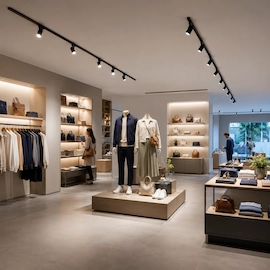
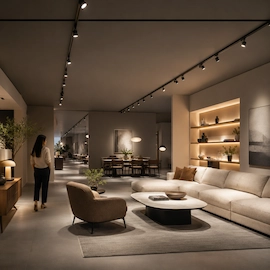
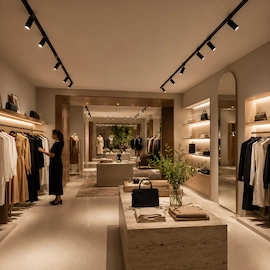
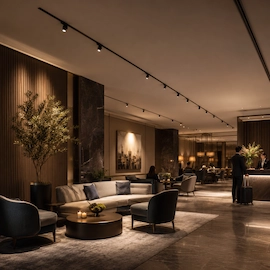
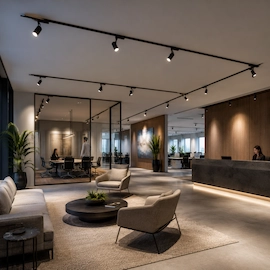
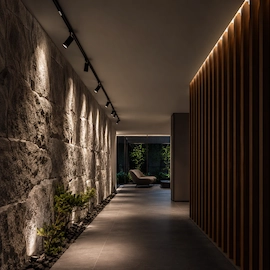
Our low profile LED track lighting can support retail stores, showrooms, galleries, offices, hotels, villas, museums, restaurants, boutiques, display shelves, and architectural interiors. We focus on practical project value: slim appearance, accurate beam control, stable drivers, high color rendering options, flexible track systems, and export-ready packaging.
Factory-direct China supply
OEM/ODM support available
Flexible MOQ for trials
Aging test before shipment
Project lighting support
Low Profile LED Track Lighting Built for Clean Ceilings and Precise Focus
Low profile LED track lighting is usually selected when a project needs focused lighting without bulky ceiling fixtures. It is used in retail stores, galleries, showrooms, hotels, offices, boutiques, museums, restaurants, villas, and product display areas where ceiling appearance matters as much as lighting performance. The goal is simple: keep the ceiling clean, direct light accurately, and make products, artwork, surfaces, or architectural details look better.
For B2B buyers, the risk is not only choosing the wrong wattage.
If the CRI is low, products may look dull and colors may not appear accurate. If the beam angle is wrong, display shelves may have bright spots, dark gaps, or glare. If the driver is unstable, the track heads may flicker, buzz, or fail early. If the housing is too compact without proper heat control, the LED chip and driver may run hot. If the track adaptor does not match the rail system, contractors can face jobsite delays. If the dimming protocol is not confirmed, the final installation may not work with Triac, 0–10V, DALI, or smart controls. If packaging is weak, slim track heads, lenses, and adaptors can arrive scratched or misaligned before installation.
That is why low profile track lighting should not be selected only by style and price. A serious buyer needs to confirm track type, input voltage, wattage, lumen output, beam angle, CRI, CCT, dimming method, driver structure, housing material, thermal path, adaptor compatibility, rotation angle, finish color, glare control, packaging, and certification needs per SKU before bulk ordering.
VST Lighting supports this process as a low profile LED track lighting supplier in China with 10 years of LED lighting production experience. Our management team averages 9 years in the LED lighting business, and our trained production workers understand assembly, testing, and export handling for commercial lighting products. Our engineers use integrating spheres to check lumen output, color temperature, and CRI. Aging racks help us review stability before shipment. For project buyers who need stronger technical proof, photometric data and third-party LM-79 or LM-80 reports may be available depending on product model and order requirement.
We also understand the real project conditions behind track lighting selection. A retail store may need Ra90+ color rendering and 24° or 36° beams for merchandise. A gallery may need narrow beam control and low glare. A showroom may need zoomable or adjustable heads because displays change often. A hotel may need warm CCT and dimming comfort. A magnetic track system may require safe low-voltage matching, and a magnetic LED profile installation guide can help project buyers understand rail placement, power matching, and clean ceiling integration. A distributor may need private labels, carton marks, and repeatable finishes. These details should be reviewed before production, not after the goods arrive.
Your true cost is not only the track light price. It includes sample failure, dimming mismatch, installation delay, display lighting complaints, color inconsistency, replacement labor, damaged finish, and lost customer trust. VST Lighting helps reduce these risks by checking product structure, LED performance, driver matching, optical design, adaptor compatibility, packaging, and order requirements before mass production.
If you need a LED track lighting low profile manufacturer that can support sample review, OEM/ODM customization, technical communication, quality control, packaging confirmation, and shipment coordination, VST Lighting can help you build a safer sourcing plan from China.
Project-Grade Low Profile Track Lighting

-
Full tilt and swivel adjustability
-
Perfect for task or feature lighting
-
Easy to reposition along the track
-
Useful for changing layouts or displays
-
Works for both home and commercial use

-
Narrow & focused beam
-
Easily movable along the magnetic rail
-
Low-voltage and energy-efficient
-
Minimalist, modern appearance
-
Ideal for display shelves, artwork, and retail highlights

-
Stay locked at one place on the rail
-
Often still adjustable in angle
-
Lower cost and simpler structure
-
Good for consistent lighting layouts and balance
-
Ideal for kitchens, offices, and workspaces everywhere

-
Safer low-voltage operation
-
Slim and compact track profiles
-
Reduced heat and energy usage
-
Perfect for small modern interiors and décor
-
Often used in magnetic track systems for convenience

-
Rails can bend or follow room shapes
-
Allows artistic or custom lighting
-
Suits irregular ceiling or wall designs
-
Compatible with various small LED heads
-
Great for boutiques, galleries, and modern homes

-
Minimalist and clean installation
-
Very discreet lighting appearance
-
Perfect for modern interior design
-
Offers adjustable light positions when required
-
Ideal for small spaces needing subtle lighting and comfort
Subtle Light with Strong Presence (3)
-

-
Choose light tone to set mood
-
Warm for cozy, cool for modern look
-
High color accuracy (good CRI) options
-
Suitable for both accent and general lighting
-
Works with any track style or rail type
-
-
-
Adjustable beam width
-
One fixture can do accent + ambient lighting
-
Reduces need for multiple light types
-
Ideal for dynamic or changing spaces
-
Great for galleries and retail displays and showrooms
-
-
-
Control different groups of lights separately
-
Enables layered lighting scenes
-
Good for multifunctional rooms
-
Works with both spot and flood heads
-
Useful for living rooms, studios, or showrooms
-
Highlighted Features of LED Track Lighting Low Profile Manufacturer
Compact low profile LED track lighting keeps ceilings clean while providing focused illumination for retail, gallery, office, and hospitality spaces.
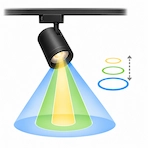
Adjustable, zoomable, narrow, medium, and wide beam options help buyers match product displays, artwork, walls, and task zones.
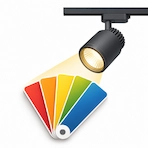
Ra90+ options can support retail, gallery, showroom, and display lighting where accurate color appearance is important.
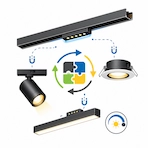
Magnetic, recessed, low-voltage, dual-circuit, dimmable, and selectable CCT options can support different project and OEM needs.


High-Performance LED Chips | Bright, Consistent, and Reliable
LED chips used in low profile LED lights are engineered to deliver bright, clear, and stable illumination while maintaining exceptionally low power consumption. They provide high color accuracy with CRI 90+, ensuring natural and true-to-life visual performance across all low profile track lighting led applications. These advanced chips support a full range of color temperatures from 2700K to 6500K, allowing designers to choose warm, neutral, or cool tones for any led low profile track lighting or low profile track led light installations. With excellent thermal management capability.

Satisfied Customers


Common Applications of LED Track Lighting Low Profile

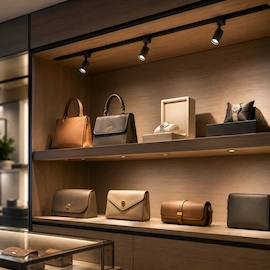
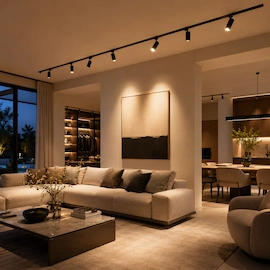

Low Profile Lighting Solutions from VST
- Manufacturing
- Installation


Yes. We can support private labels, product stickers, carton marks, customized packaging, instruction sheets, finish colors, track adaptor options, beam angle options, and market-specific product details. For distributors and importers, OEM support helps build your local brand while keeping factory-direct supply.
We support flexible MOQ for many LED track lighting orders. The final MOQ depends on fixture model, housing finish, driver option, track adaptor type, dimming function, packaging request, customization level, and material availability. We try to support sample orders and trial orders for new customers.
Yes. Sample orders are available so you can check lumen output, CCT, CRI, beam angle, dimming performance, track adaptor fit, finish quality, packaging, and installation compatibility before mass production. Sample approval helps reduce sourcing risk.
Certification options vary by model, track system, driver, and destination market. Depending on the SKU, options may include CE, RoHS, UL/ETL, CB, VDE, PSE, SAA, C-tick, RCM, or other compliance documents. Please confirm your required documents before ordering.
Yes. Beam angle, CCT, CRI, dimming method, driver option, housing finish, adaptor type, track system, and packaging can be discussed based on product structure and project requirement. Our team will review feasibility before sample production.
Yes. We can help review whether your project needs 2-wire, 3-wire, 4-wire, recessed, surface-mounted, magnetic, low-voltage, or dual-circuit track lighting. Product matching should be confirmed before ordering so the track heads and rails fit correctly on-site.
Yes. We support long-term cooperation and respond to product, shipment, installation, dimming, adaptor compatibility, finish quality, replacement, and maintenance questions. If a problem appears, our team reviews the case based on order details and provides practical support.
Related Products


Low Profile LED Track Lighting – Comprehensive FAQ Guide
Explore our in-depth FAQ guide focused on low profile LED track lights, low profile LED lighting kits, and advanced low profile track lighting LED systems developed specifically for B2B buyers, electrical contractors, lighting distributors, and commercial project designers. Whether you are sourcing led low profile track lighting, comparing low profile led light fixtures, or evaluating trusted led track lights low profile manufacturers, this guide provides the technical clarity and market insight required for confident decision-making. It covers system compatibility, performance standards, thermal management design, beam angle selection, and dimming technologies to support professional applications. Ideal for businesses seeking durable, high-performance solutions from reliable wholesale low profile led lights partners, experienced china distributor low profile track led light suppliers, and established manufacturers serving commercial, retail, hospitality, and architectural lighting projects worldwide.
Choose low profile LED track lighting by checking the track system, mounting style, beam angle, CRI, CCT, lumen output, dimming method, driver design, housing size, and installation environment. The right fixture should match both the ceiling design and the lighting purpose.
For most projects, confirm these points before ordering:
Track system: 2-wire, 3-wire, 4-wire, magnetic, recessed, surface-mounted, or low-voltage
Installation: ceiling-mounted, recessed, suspended, wall-mounted, or track rail layout
Wattage: based on accent, task, display, or general lighting needs
Lumen output: confirm actual lm and lm/W
Beam angle: 15°, 24°, 36°, 60°, zoomable, or project-specific
CRI: Ra80 for general use, Ra90+ for retail, gallery, and showroom lighting
CCT: 2700K, 3000K, 4000K, 5000K, or selectable CCT
Dimming: Triac, 0–10V, DALI, PWM, smart control, or non-dimming
Housing finish: white, black, silver, or custom color
Adaptor compatibility: must match the track rail before bulk ordering
For retail stores, galleries, and showrooms, sample testing in the real track system is strongly recommended before mass production.
Low profile LED track lighting uses a slimmer, more discreet fixture body, while standard LED track lighting usually has a larger visible housing. Low profile designs are better for clean ceilings, premium interiors, retail displays, galleries, and architectural projects where fixture appearance matters.
| Item | Low Profile LED Track Lighting | Standard LED Track Lighting | Best For |
|---|---|---|---|
| Fixture appearance | Slim, compact, and discreet | Larger and more visible | Low profile for modern interiors |
| Ceiling design | Keeps ceiling cleaner | More noticeable fixture layout | Low profile for retail and galleries |
| Heat space | More limited internal space | More room for heat dissipation | Standard for higher-power needs |
| Visual style | Minimal and premium | Practical commercial appearance | Low profile for design-led projects |
| Product selection | Needs careful driver and thermal design | More flexible housing volume | Depends on wattage and project style |
Low profile track lights should not be chosen only for appearance. Because the body is compact, heat dissipation and driver matching must be checked carefully during sample approval.
Magnetic low profile track lighting uses a low-voltage magnetic rail system where fixtures attach by magnetic and mechanical contact, while traditional track lighting usually uses mechanical adaptors on mains-voltage rails. Magnetic systems are often preferred for flexible, modern interiors, while traditional tracks are common in retail and commercial projects.
| Item | Magnetic Low Profile Track Lighting | Traditional Track Lighting | Best For |
| Track connection | Magnetic and mechanical contact | Mechanical adaptor locked into rail | Magnetic for flexible modern layouts |
| Voltage type | Usually low-voltage system | Often mains-voltage system | Traditional for common commercial retrofit |
| Fixture movement | Easy repositioning in many systems | Repositioning depends on adaptor type | Magnetic for display changes |
| Ceiling appearance | Very clean and minimal | More visible rail and adaptor | Magnetic for premium interiors |
| System planning | Needs matching power supply and rail system | Needs correct phase and adaptor matching | Depends on project design |
Before ordering, confirm rail type, voltage, driver location, power capacity, fixture load, and installation method. Track heads and rails from different systems may not be compatible.
Choose beam angle based on the distance to the target, display size, ceiling height, and lighting purpose. Narrow beams create stronger accent focus, while wider beams provide broader coverage.
Typical selection guidance:
15°–24°: artwork, jewelry, small product displays, columns, and focused accents
24°–36°: retail shelves, boutique displays, galleries, and showroom products
36°–60°: general accent lighting, wall features, office zones, and hospitality interiors
Zoomable beam: displays that change often or projects needing flexible aiming
Wall-wash optics: gallery walls, retail perimeter shelves, and architectural surfaces
Anti-glare accessories: boutiques, galleries, hotels, and low-ceiling projects
For retail and gallery projects, beam angle should be tested with the real mounting height and target distance. A wrong beam can create bright spots, dark gaps, or uncomfortable glare.
Ra90+ is recommended for retail stores, galleries, museums, showrooms, boutiques, jewelry shops, cosmetics counters, and product display areas. Ra80 can be acceptable for general commercial lighting, but color-sensitive projects usually need higher color rendering.
Typical CRI guidance:
Ra80: offices, corridors, general commercial interiors, and utility areas
Ra90+: retail shelves, fashion stores, galleries, museums, furniture showrooms, and product displays
Ra95+: high-end galleries, color evaluation areas, cosmetics, jewelry, and premium displays
For retail buyers, CRI affects how fabric, food, furniture, artwork, cosmetics, and packaging appear to customers. Poor color rendering can make products look dull even when the lighting is bright.
Choose CCT based on the interior mood, product type, and brand atmosphere. 3000K is common for hospitality and warm retail, while 4000K is common for showrooms, galleries, offices, and clean commercial interiors.
Typical CCT choices:
2700K–3000K: hotels, restaurants, boutiques, villas, warm retail interiors
3500K–4000K: galleries, museums, showrooms, offices, and balanced commercial spaces
5000K: task zones, technical displays, workshops, and spaces needing sharper visibility
Selectable CCT: distributors and project buyers who need flexible stock options
Tunable white: projects needing warm-to-cool adjustment
For repeat orders, ask the supplier to control CCT tolerance and LED binning. This helps prevent visible color difference between track heads installed in the same room.
Dimmable LED track lighting can support smart control when the driver, track system, controller, and wiring method are compatible. Dimming compatibility should be confirmed before sample approval because compact fixtures may have limited driver space.
Common control options:
Triac dimming: residential, hospitality, and some commercial interiors
0–10V dimming: commercial projects and office lighting systems
DALI: professional building control and gallery projects
PWM dimming: low-voltage track or custom lighting systems
Bluetooth, Zigbee, Wi-Fi, or smart control: project-specific applications
Magnetic track control: depends on the rail and power supply system
Check these points before ordering:
Driver size and dimming protocol
Minimum dimming level
Flicker performance during dimming
Track rail compatibility
Controller load capacity
Input voltage and wiring method
Local compliance requirement per SKU
Wrong dimmer matching can cause flicker, buzzing, unstable brightness, or complete dimming failure.
Low profile LED track lights flicker because of driver mismatch, unstable input voltage, incompatible dimmer, poor track contact, loose adaptor fitting, overloaded circuit, or low-quality driver design. Troubleshooting should start with the driver, dimmer, track rail, and adaptor connection.
Common causes and fixes:
Incompatible dimmer: use the correct Triac, 0–10V, DALI, or PWM driver
Poor adaptor contact: check the track head lock and rail contact points
Unstable input voltage: measure voltage at the track rail
Overloaded track circuit: reduce load or split the circuit
Wrong rail type: match fixture adaptor to the correct track system
Weak driver: select a better driver option
Loose wiring: inspect terminals and connector points
Smart control conflict: confirm controller output and load limit
For project buyers, test samples with the actual track rail, dimmer, and control system before bulk installation.
Low profile LED track lights overheat when the fixture body cannot transfer heat away from the LED chip, PCB, driver, or housing efficiently. Compact track heads need careful thermal design because they have less internal space than larger fixtures.
Key prevention points:
Match wattage to housing size and heat sink capacity
Use aluminum housing or suitable thermal structure
Confirm LED module and PCB thermal path
Avoid excessive wattage in very small heads
Keep airflow around the fixture where possible
Confirm ambient temperature of the site
Use a stable driver with proper thermal protection
Run samples for several hours before approval
Check surface temperature during testing
Overheating can reduce lumen maintenance, shift color, damage drivers, and shorten product life. For slim fixtures, thermal review is as important as appearance.
Reduce glare by choosing the correct beam angle, recessed light source, anti-glare lens, honeycomb louver, reflector design, aiming angle, mounting position, and fixture spacing. Glare control is especially important in galleries, boutiques, hotels, offices, and low-ceiling retail spaces.
Practical glare-reduction methods:
Use narrower beams for focused displays
Avoid aiming fixtures directly at eye level
Choose deep-set optics where available
Add honeycomb louver or anti-glare accessory
Use proper spacing between track heads
Avoid excessive wattage in low-ceiling spaces
Select warm or neutral CCT where comfort matters
Aim at products or walls, not directly toward customers
For premium interiors, a bright track light is not enough. The light should guide attention without creating visual discomfort.
Before approving a sample, inspect lumen output, wattage, CCT, CRI, beam angle, driver stability, dimming performance, housing finish, heat performance, adaptor fit, rotation angle, packaging, and label accuracy. The approved sample should become the production reference.
Sample approval checklist:
Measure actual power consumption in W
Check brightness and beam distribution
Confirm CCT and CRI
Test flicker and driver stability
Test dimming if required
Check track adaptor fit in the real rail
Inspect rotation and aiming movement
Review housing finish and surface quality
Check lens, reflector, and glare control
Run the light for several hours
Check fixture temperature
Review product label and manual
Inspect carton and inner protection
For OEM buyers, finish color, label placement, and packaging should be approved together with the lighting performance.
Low profile LED track lights should be packed with inner protection that protects the housing finish, lens, reflector, adaptor, and driver area. Export packaging is important because slim track heads can be scratched, misaligned, or damaged during transport.
Good packaging should include:
Individual fixture protection or sleeves
Lens and reflector protection
Adaptor protection to avoid bending or cracking
Inner foam or molded support where needed
Strong outer carton
Clear carton marks
Separate packing for rails and accessories if needed
Moisture protection for sea freight when required
Palletizing for larger orders when suitable
Packaging should protect both appearance and function. A track light may still work electrically but become unacceptable if the finish is scratched or the adaptor is damaged.
Provide track system type, fixture wattage, beam angle, CRI, CCT, dimming method, housing finish, input voltage, quantity, packaging request, certification need, and destination country. Clear information helps the manufacturer quote faster and recommend a compatible low profile track lighting solution.
Useful details to send:
Application: retail, gallery, showroom, hotel, office, residence, display shelf, or museum
Track type: 2-wire, 3-wire, 4-wire, magnetic, recessed, surface-mounted, or custom
Input voltage and frequency
Fixture wattage or lumen target
Beam angle or zoomable requirement
CCT and CRI
Dimming method: Triac, 0–10V, DALI, PWM, smart control, or non-dimming
Housing finish: white, black, silver, or custom color
Adaptor type and rail compatibility
Rotation or tilt requirement
Anti-glare accessory requirement
Logo, label, manual, and packaging needs
Order quantity and sample quantity
Destination market
Required compliance documents per SKU
Shipping terms: EXW, FOB, CIF, DDP, or door-to-door request
With these details, VST Lighting can provide a more accurate quotation, sample plan, product recommendation, and production schedule for your low profile LED track lighting order.