
LED strip corner profile cost for DIY projects usually ranges from USD 2 to USD 12 per meter for standard aluminum channels, and USD 8 to USD 25 per meter for premium or custom profiles. Your final budget depends on profile size, aluminum weight, diffuser type, finish, length, accessories, shipping, and the LED strip wattage it must manage.
Small profile choices can change the full project cost fast. Many buyers price only the aluminum channel, then face extra spending on end caps, clips, soldering, drivers, freight, or replacement parts after poor heat control. That can hurt margins, delay installation, and create callbacks.
The better way is to calculate the full installed cost per meter before buying. From our manufacturing-floor perspective, a corner profile is not just a strip holder. It is a thermal path, a beam-angle tool, a safety cover, and a finishing part.
1. What price range should you expect for LED strip corner profiles?
Most DIY corner aluminum profiles sit in three price bands. Economy 45-degree profiles often cost USD 2 to USD 4 per meter when bought in bulk from a factory or trade supplier. Mid-range profiles cost USD 4 to USD 8 per meter and usually have thicker aluminum, better diffuser fit, cleaner anodizing, and more stable dimensions. Premium corner profiles, deep anti-glare channels, black finishes, or custom lengths can reach USD 8 to USD 25 per meter.
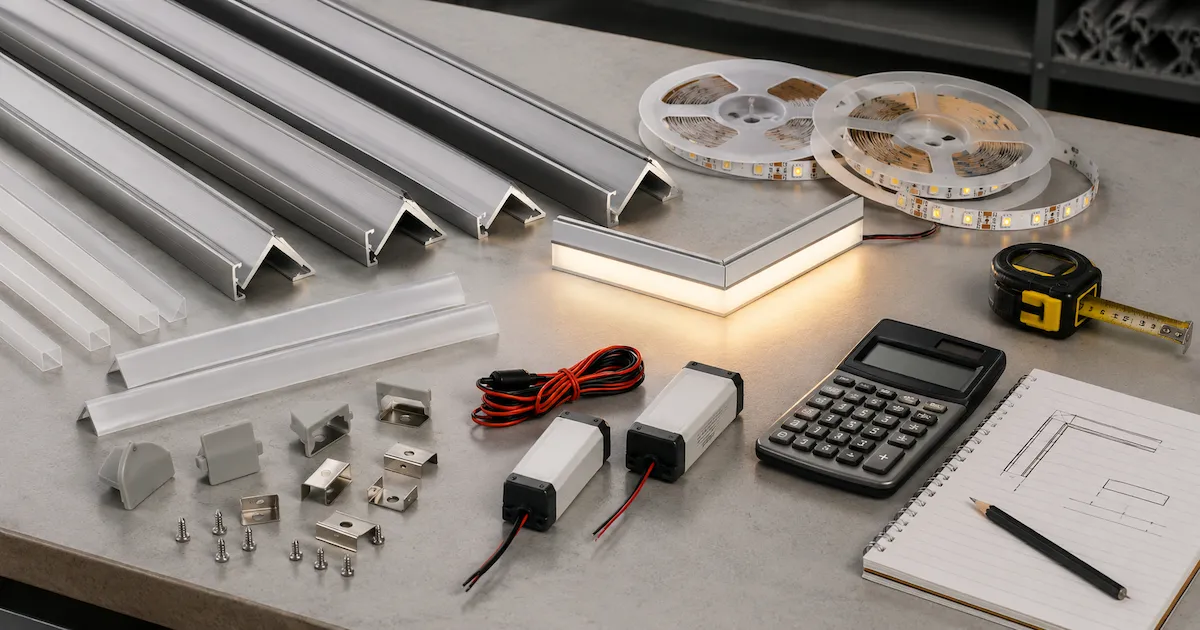
The profile price alone does not tell the full story. A USD 3 profile may become expensive if the diffuser yellows, the end caps do not fit, or the LED strip overheats behind a thin wall.
Typical DIY uses include under-cabinet lighting, wardrobe corners, retail shelves, display cases, stairs, ceiling coves, and projects where you need to install LED strip corner channel under cabinet areas neatly. Each use has a different risk level. A short kitchen cabinet run can accept a lighter profile. A hotel reception shelf with 14.4W/m strip needs a stronger channel and better heat path.
| Profile grade | Typical cost per meter | Common use | Main risk if under-specified |
|---|---|---|---|
| Economy corner profile | USD 2–4 | Small cabinets, hobby projects | Weak diffuser fit, thin aluminum |
| Mid-range corner profile | USD 4–8 | Kitchens, shelves, wardrobes | Usually balanced, check tolerance |
| Premium corner profile | USD 8–25 | Hotels, retail displays, custom joinery | Higher upfront cost |
| Custom corner profile | Quote-based | OEM furniture, special angles | Tooling, MOQ, longer lead time |
2. Which cost factors change the price most?
The biggest cost drivers are aluminum weight, profile dimensions, surface treatment, diffuser material, machining, packaging, and order quantity. Aluminum is priced by weight, so the cost of aluminium profiles for LED tape usually rises when a deeper profile has thick side walls and more metal. A wider base can also improve heat transfer, which matters when your LED strip runs above 10W/m.
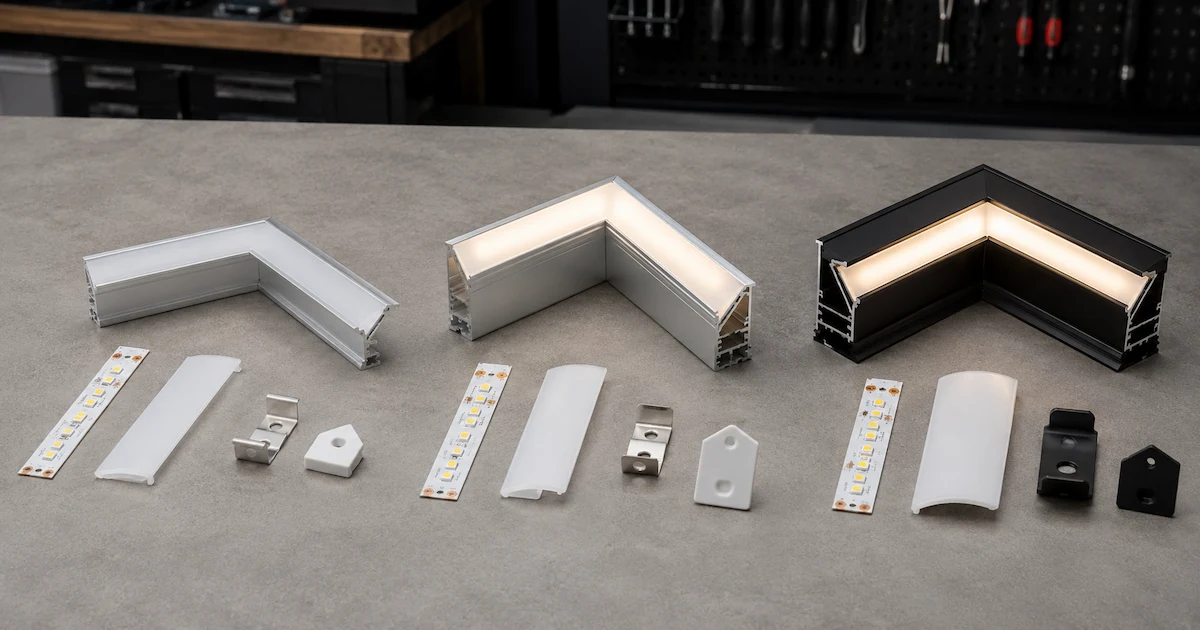
Diffuser choice matters too, especially when comparing the top LED channel diffusers for smooth light, better protection, and lower long-term replacement cost. A basic polycarbonate diffuser is cheaper. A higher-grade milky diffuser with better UV stability costs more, but it can reduce spotting and keep the finish clean over time.
Order quantity changes the unit cost. A 20-meter DIY order from a local shop may be 2–4 times the factory bulk price. A 500-meter order for contractors, furniture makers, or electrical distributors gives better pricing, but you need to check packaging and damage rate during shipping.
In our lab tests using integrating spheres, we often measure lower light output after adding a milky diffuser. That loss may be 10% to 35%, depending on material and thickness.
| Cost factor | Low-cost option | Higher-cost option | Why it affects budget |
|---|---|---|---|
| Aluminum thickness | Thin wall | Heavy wall | More metal, better heat spread |
| Diffuser | Clear or basic milky PC | UV-resistant milky PC/PMMA | Better appearance and durability |
| Finish | Raw or standard silver | Black, white, custom anodized | Extra process and stricter QC |
| Length | Standard 1m/2m | Cut-to-size Voltage drop becomes visible faster on longer 12V runs, so using a voltage drop calculator before ordering can help you plan wire size and feed points more accurately. | Labor and cutting loss |
| Packing | Simple sleeve | Reinforced export carton | Lower damage rate in freight |
3. How do profile size and shape affect your DIY budget?
Corner profiles vary in depth, width, and mounting style. Small profiles are cheaper and easier to hide. Deep profiles cost more but give better dot-free diffusion, especially with SMD strips. Wide bases help heat dissipation and make solder joints easier to place inside the channel.
The shape also affects labor. A clip-in profile is faster to mount. A screw-through base may be stronger but takes more time. Adhesive-only mounting can fail on warm or dusty surfaces.
| Profile shape | Cost level | Best fit | Budget note |
|---|---|---|---|
| Slim 45-degree corner | Low | Decorative cabinets | Limited heat control |
| Deep anti-glare corner | Medium-high | Retail shelves, hotels | Better finish, higher cost |
| Wide corner channel | Medium | 10–14.4W/m strips | Better heat path |
| Recessed corner profile | High | Furniture production | More machining labor |
4. How much do diffusers, end caps, and clips add?
Accessories can add 15% to 50% to the profile budget. A corner LED channel without diffuser, end caps, and clips is rarely a complete installation kit. For a neat DIY job, you usually need a diffuser, two end caps per length, mounting clips, screws, and sometimes corner connectors.
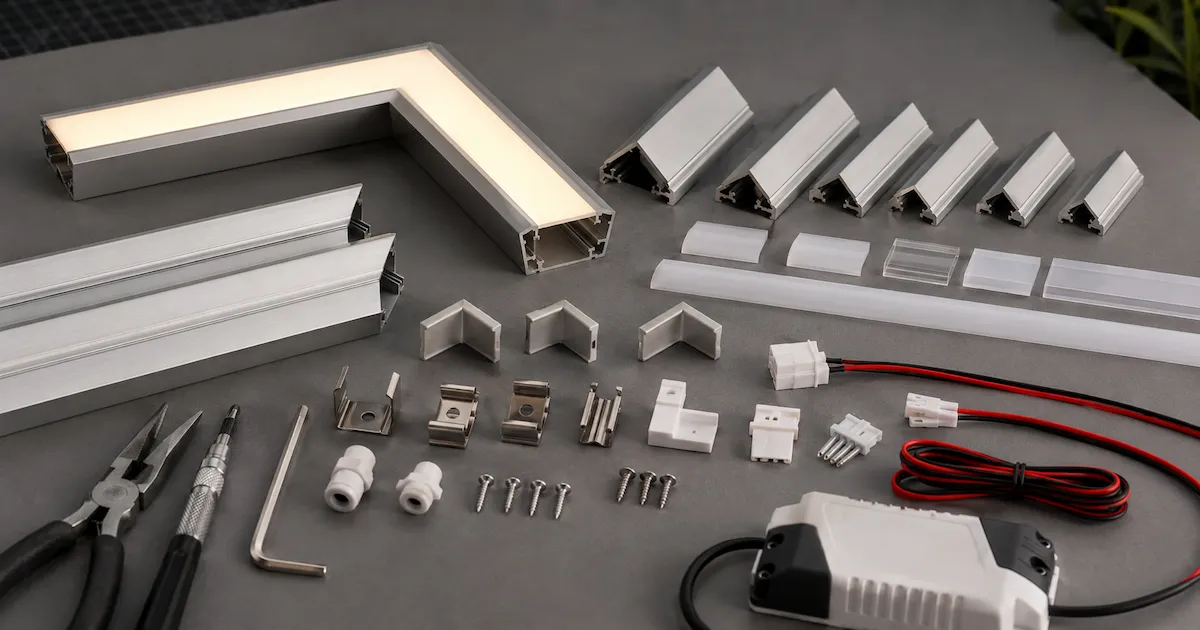
A standard LED channel diffuser may cost USD 0.40 to USD 2.50 per meter depending on material and optical finish. End caps often cost USD 0.10 to USD 0.80 each. Mounting clips may cost USD 0.10 to USD 0.50 each. For short sections, accessories can cost more than expected because you need end caps for every cut length.
Pro Tip from VST Technical Team: “If you plan many short profile sections, calculate cost per finished piece, not only cost per meter. End caps, solder points, and labor become the real cost drivers.”
To better understand how diffuser depth, channel shape, and LED density affect the final lighting result, this neutral video gives a practical visual comparison before you choose your profile and strip combination.
| Accessory | Typical price | Quantity guide | Cost risk |
|---|---|---|---|
| Milky diffuser | USD 0.40–2.50/m | Same length as profile | Light loss if too dense |
| End caps | USD 0.10–0.80/pc | 2 per cut profile | Multiplies on short runs |
| Mounting clips | USD 0.10–0.50/pc | 2–4 per meter | Weak clips cause sagging |
| Screws | USD 0.02–0.10/pc | Based on substrate | Wrong screw damages surface |
| Cable exits | USD 0.20–1.00/pc | At feed points | Poor planning slows install |
5. How does LED strip choice change corner profile cost?
The LED strip changes the profile you should buy. A low-power 4.8W/m strip can work in a small corner channel for decorative use. A 9.6W/m or 14.4W/m strip needs better heat control. A 19.2W/m strip may require a wider and heavier profile, shorter run length, or stronger mounting surface.
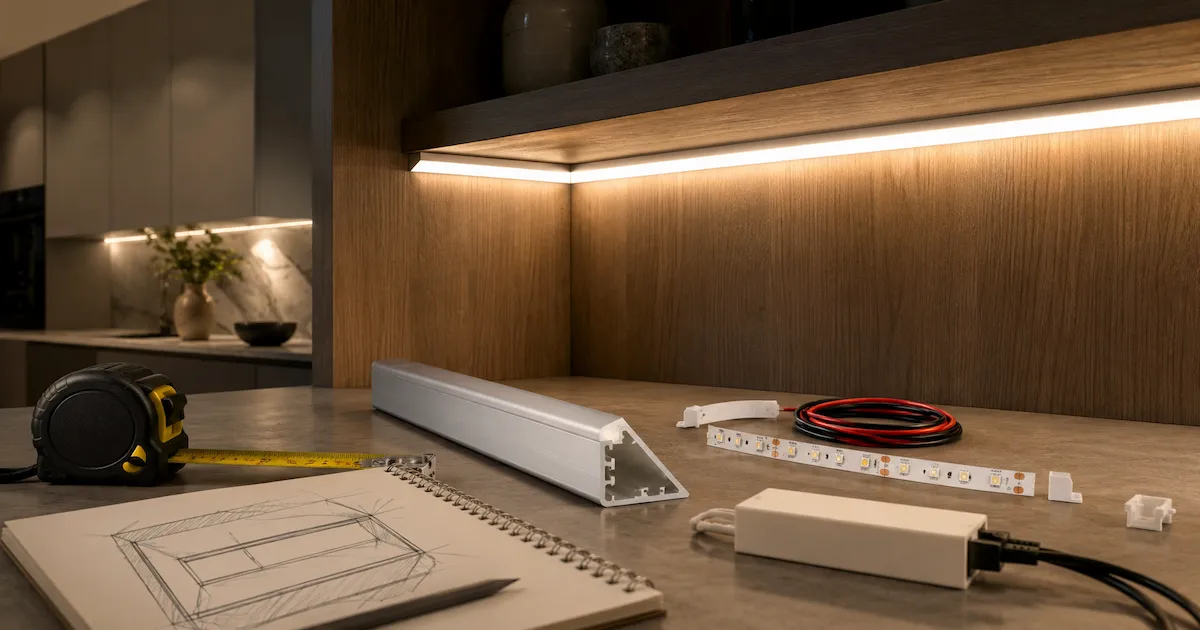
Voltage drop becomes visible faster on longer 12V runs. A 24V strip usually performs better for longer runs because current is lower for the same wattage.
Match the LED strip, profile, and driver together. A mismatch can create heat, flicker, voltage drop, or color complaints.
| Item | 12V LED strip | 24V LED strip |
|---|---|---|
| Typical DIY length | Short runs, 1–3m | Medium runs, 3–10m |
| Current level | Higher current | Lower current |
| Voltage drop risk | Higher | Lower |
| Driver availability | Very common | Common in trade supply |
| Best use | Small shelves, cabinets | Kitchens, coves, display runs |
| Profile impact | May need more feed points | Cleaner long-run planning |
6. What is the real installed cost per meter?
The real installed cost includes profile, diffuser, accessories, LED strip, driver, wire, connectors, soldering, cutting, mounting labor, waste, and freight. For a DIY user, labor may feel free. For contractors or furniture workshops, labor affects margin directly.
A practical budget for a neat indoor corner lighting project often lands between USD 8 and USD 35 per installed meter. Economy decorative setups near the low end; commercial-grade display lighting with high CRI strips and reinforced profiles sits at the high end.
| Cost component | Low range per meter | Mid range per meter | High range per meter |
|---|---|---|---|
| Corner profile with diffuser | USD 2.5 | USD 6 | USD 15 |
| LED strip | USD 2 | USD 6 | USD 14 |
| Accessories and wire | USD 0.8 | USD 2 | USD 5 |
| Driver share | USD 1 | USD 3 | USD 8 |
| Labor or prep value | USD 2 | USD 8 | USD 20 |
| Estimated installed total | USD 8.3 | USD 25 | USD 62 |
7. How do shipping, cutting, and MOQ affect the price?
Shipping can change the total price more than expected because aluminum profiles are long and need protection. Air freight is fast but costly; sea freight is cheaper for bulk orders but needs better packing and planning.
Cutting also changes cost. Standard lengths such as 1m, 2m, or 3m are cheaper. Cut-to-size service saves installation time and can reduce wood dust or jobsite cleanup during cabinet and furniture work, but it adds labor and cutting loss.
MOQ matters: small local buys cost more per meter; factory-direct orders need freight planning but lower unit price.
| Purchase route | Best quantity | Price level | Main advantage | Main risk |
|---|---|---|---|---|
| Local retail | 5–30m | High | Fast access | Limited profile choice |
| Local distributor | 30–300m | Medium | Stock and support | Higher unit price |
| Factory direct | 300m+ | Low-medium | Better customization | Freight planning needed |
| Cut-to-size supply | Project-based | Medium-high | Faster installation | Needs accurate drawings |
8. Where can you save money without hurting quality?
Save by standardizing profile models, choosing 24V strips for longer runs, ordering correct lengths, and using factory-prepared leads for repeated layouts. Avoid thin aluminum, weak diffusers, or poor drivers.
Pre-soldered wires and standard lengths reduce labor on repeat projects. Choose the correct diffuser from the start to avoid buying higher-wattage strips later.
| Saving method | Where it helps | Safe? | Comment |
|---|---|---|---|
| Use standard profile lengths | Cabinets, shelves | Yes | Reduces cutting waste |
| Use 24V for longer runs | Coves, retail | Yes | Lowers voltage drop risk |
| Pre-soldered leads | Repeated sections | Yes | Saves labor and space |
| Thin profile for high wattage | Any hot area | No | Heat risk rises |
| Cheapest unknown driver | Any project | No | Flicker and safety risk |
9. What common mistakes increase total project cost?
Common mistakes when choosing LED strip channels include buying strip and profile separately without checking fit, ignoring power feed positions, and relying only on adhesive tape for mounting. These errors cause rework, color shift, and callbacks.
Quick checklist before ordering:
| Checkpoint | What to verify | Why it matters | Fix before buying |
|---|---|---|---|
| Strip width | 8mm, 10mm, 12mm, COB width | Must fit channel base | Request profile drawing |
| Connector size | Clip height and width | May block diffuser | Use soldered leads |
| Wattage | W/m rating | Affects heat | Pick wider profile if needed |
| Voltage | 12V or 24V | Affects feed layout | Add feeds or choose 24V |
| Diffuser | Clear, frosted, milky | Affects dots and lumen loss | Test a sample |
| Mounting surface | Wood, metal, gypsum | Affects heat and fixing | Select clips/screws |
| Length plan | Cut sections | Affects end caps and waste | Make a cut list |
10. How should you plan a reliable DIY corner profile budget?
Start with the room or product layout, not the profile catalog. Measure every run, mark cable exits, decide driver locations, and define required brightness. Then select the LED strip and profile as a pair.
A simple budget plan:
- Make a cut list with every profile section
- Count end caps per section
- Choose strip voltage and wattage
- Add driver capacity with 15%–25% headroom
- Add 5%–10% waste
- Test one sample before buying bulk
Conclusion
LED strip corner profile cost is more than a meter price. Aluminum weight, diffuser choice, accessories, strip wattage, labor, cutting, and freight all shape the real budget. The right profile protects appearance, heat control, safety, and margin. If you are unsure about voltage drop, diffuser loss, or profile sizing for a project, send our engineering team your drawings or cut list. We’ll calculate it manually and point out hidden cost risks before you order.
FAQ
Q1: What is the average LED strip corner profile cost for DIY projects?
Most standard aluminum corner profiles cost USD 2 to USD 12 per meter. Premium, deep, black, or custom profiles can cost USD 8 to USD 25 per meter before accessories.
Q2: Do I need a diffuser for LED strip corner profiles?
Yes, in most visible installations. A diffuser protects the strip, softens glare, and improves appearance. Account for lumen loss, which can range from about 10% to 35%.
Q3: Are 12V or 24V LED strips better for corner profiles?
For short runs, 12V can work well. For longer runs, 24V is usually better because it reduces current and lowers voltage drop risk.
Q4: Can I install LED strip corner profiles with adhesive tape only?
For short decorative runs, adhesive may work. For warm, dusty, long, or commercial installations, use clips or screws to avoid sagging and callbacks.
Q5: How can I reduce the total cost without reducing quality?
Standardize profile lengths, use the right voltage, plan cable exits, test samples, and use pre-soldered leads for repeated sections. Avoid very thin profiles for high-wattage strips.
