
LED aluminum profile application ideas help you use LED strips in a cleaner, safer, and more durable way across furniture, retail, residential, and commercial projects. The main value is simple: better heat control, neater installation, softer light output, and fewer maintenance issues over time.
If you have ever seen uneven strip lighting, visible dots, poor cable routing, or early lumen loss, the problem usually starts with weak channel selection or no profile at all. That creates project delays, callbacks, and avoidable labor cost.
This article gives practical led aluminum profile application ideas you can use in real installations. In our lab tests using integrating spheres and thermal checks, we regularly see profile choice affect both light quality and service life.
1. Why use LED aluminum profiles in the first place?
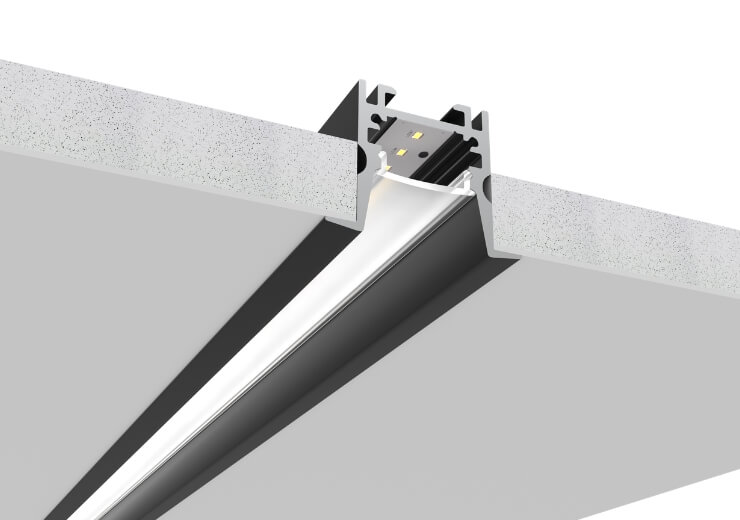
Many projects still treat the profile as an accessory. That is a mistake. The profile often determines whether the lighting looks professional or improvised. It supports the LED strip mechanically, improves heat dissipation, protects the PCB, and helps produce a more uniform line of light when paired with the right diffuser.
We often see installers struggle with two common issues. One is overheating in sealed wood or MDF cavities. The other is visible LED spotting in shallow installations. A suitable aluminum profile reduces both risks.
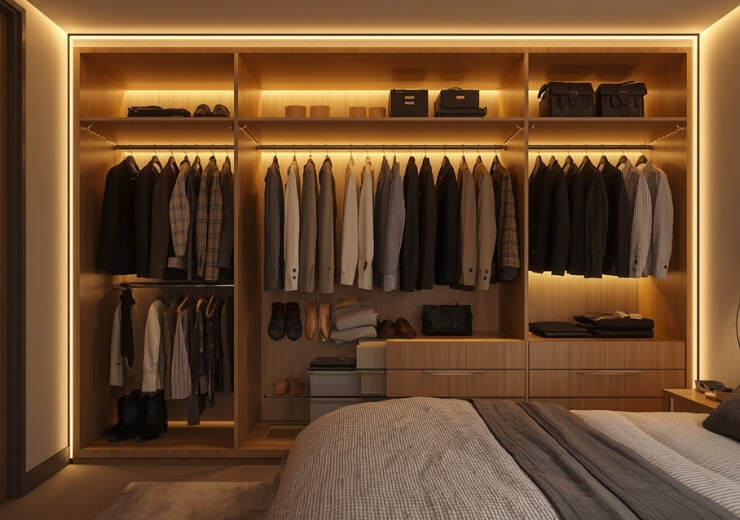
In a wardrobe rail project, for example, the profile keeps the strip straight and prevents adhesive failure.
In a retail shelf, it protects the strip from cleaning chemicals and accidental touches. In office joinery, it helps create consistent, repeatable installation dimensions.
From our manufacturing floor perspective, the profile also improves assembly quality. It gives a stable base for pre-cut lengths, end caps, clips, and cable exits. That matters because sloppy assembly leads to rework.
| Function | Without Profile | With Profile |
|---|---|---|
| Heat management | Weak | Better |
| Visual finish | Exposed strip | Clean linear finish |
| Mechanical protection | Low | Higher |
| Diffused light effect | Limited | Good with proper cover |
| Long-term maintenance | More frequent | Lower |
2. What profile types match different project needs?
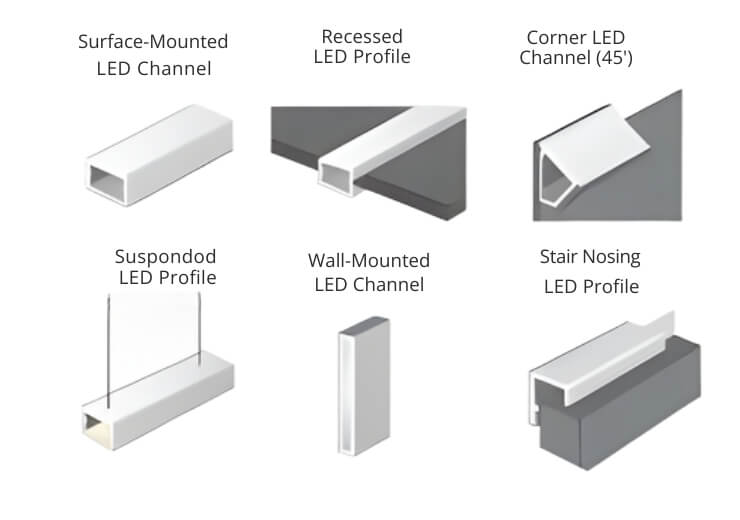
Not every application needs the same channel. Surface-mounted, recessed, corner, plaster-in, stair, floor, and suspended profiles all solve different installation problems. Choosing the wrong shape can waste material and create poor beam direction.
Surface profiles work well for under-cabinet lighting, display shelving, and retrofit jobs where cutting grooves is not practical. Recessed profiles fit furniture panels, wall niches, and premium cabinetry where a flush finish matters.
Corner profiles are useful in kitchen backsplashes, retail showcases, and vertical display corners because they direct light at about 45 degrees. Suspended profiles are common in offices and meeting spaces where direct-indirect lighting is needed.
Here is the real story: the profile shape changes both appearance and function. In a jewelry display, a small recessed profile keeps the visual language minimal. In a supermarket gondola, a deeper surface profile may be better because it is easier to service.
In hotel millwork, plaster-in profiles create a trimless result that architects often prefer.
| Profile Type | Best Use | Main Benefit | Limitation |
|---|---|---|---|
| Surface | Cabinets, shelves, retrofit | Easy installation | More visible |
| Recessed | Furniture, niches, walls | Flush finish | Needs routing/cutting |
| Corner | Corners, cabinets, showcases | Better beam angle | Lower internal width |
| Suspended | Offices, commercial interiors | Architectural linear effect | Higher system cost |
| Stair/Floor | Steps, walkways | Safety and guidance | Needs stronger cover |
3. How can profiles improve residential lighting design?
Residential spaces are one of the strongest areas for led aluminum profile application ideas because the profile turns a raw LED strip into a finished lighting element. In kitchens, profiles are used under cabinets, inside drawers, on toe kicks, and above wall units.
In bedrooms, they work well behind headboards, inside wardrobes, and in ceiling coves. In bathrooms, they help organize mirror lighting and recessed niche lighting, provided the IP rating matches the environment.
A good example is under-cabinet task lighting. Without a profile, you may get scalloped reflections on glossy stone. With a deeper channel and opal diffuser, the light becomes softer and more controlled. Another example is a floating bed base.
A low-mounted profile can create a clean halo effect without exposing the strip directly. A third case is stair skirting in duplex homes, where profiles provide both accent lighting and nighttime guidance.
Common Myth: brighter strip alone fixes poor lighting design.
Reality: brightness without optical control often causes glare. When we tested this against a standard 12V strip mounted directly on painted wood, the profile version delivered a more stable appearance and lower hotspot visibility.
4. Where do profiles add value in retail and display lighting?
Retail lighting needs precision. The wrong beam direction, color inconsistency, or exposed strip can make products look cheap. Profiles help present merchandise more clearly while protecting the strip from damage during stocking, cleaning, and daily customer traffic.
In glass showcases, slim profiles highlight watches, cosmetics, and electronics without taking visual attention away from the products. In supermarket shelves, front-mounted channels improve vertical illumination on labels.
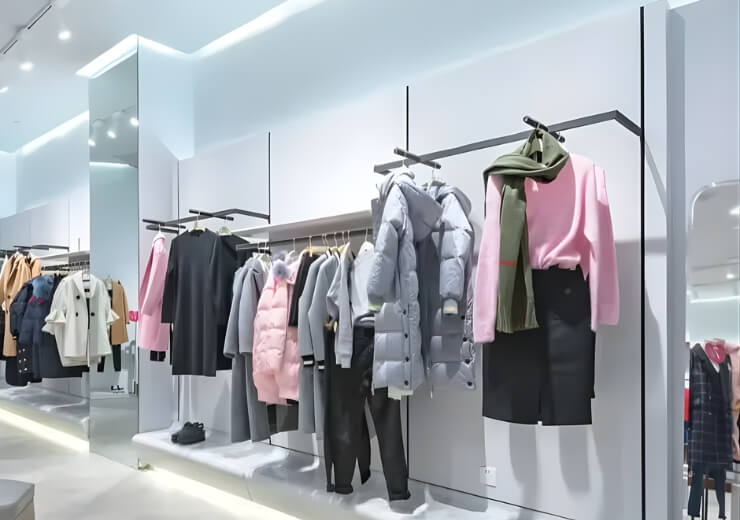
In fashion stores, recessed profiles integrated into wall bays or shelving create a premium linear look. We once saw a shelf project fail because the installer bonded strips directly onto laminated board. Heat buildup weakened the adhesive, and several runs sagged within months.
This is where it gets interesting. Profiles also help standardize store rollouts. If you are supplying chain stores, repeatability matters. Fixed channel dimensions make it easier to prepare kits with exact cuts, connectors, and mounting clips.
| Retail Area | Recommended Profile | Typical CCT | Reason |
|---|---|---|---|
| Glass showcase | Slim surface/recessed | 3000K–4000K | Clean highlighting |
| Supermarket shelf | Surface front lip | 4000K–5000K | Better label visibility |
| Fashion display | Recessed linear | 3000K–3500K | Premium ambience |
| POS counter | Corner profile | 3000K–4000K | Controlled beam direction |
| Wall niche | Deep recessed | 2700K–3000K | Soft accent effect |
5. How are profiles used in offices and commercial interiors?
Offices need more than brightness. They need visual comfort, clean lines, and service-friendly layouts. Profiles support all three. Suspended linear systems are common over workstations and meeting tables.
Recessed profiles fit corridors, reception desks, and joinery details. Corner profiles can light acoustic wall features or display edges. We often see three practical office uses. One is suspended direct-indirect lighting in open-plan areas. Another is recessed task lighting integrated into custom desks.
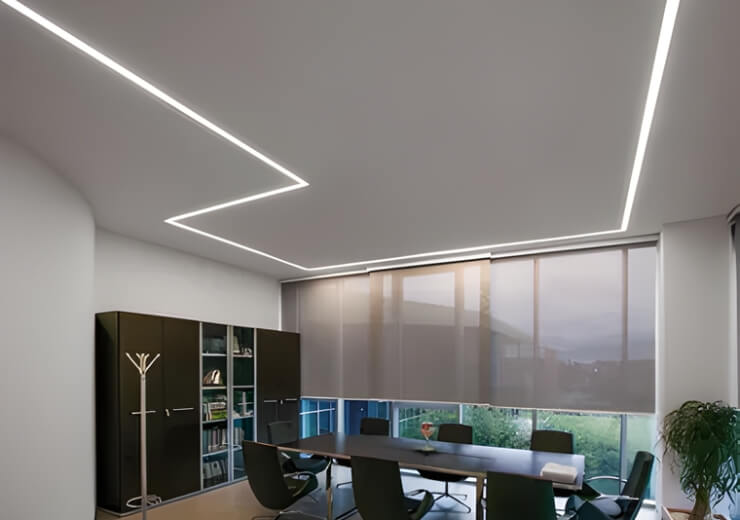
The third is cove lighting in breakout zones where softer ambient light improves comfort. In our lab tests using integrating spheres, diffuser selection changed useful output noticeably, so planners should account for cover loss during lumen calculations.
But there is a catch. A beautiful profile will not fix poor electrical planning. Long runs need voltage drop calculations, driver access, and sensible feed points. That matters to your bottom line because replacing inaccessible drivers above finished ceilings is expensive.
| Office Application | Mounting Style | Key Design Goal | Note |
|---|---|---|---|
| Open workstation | Suspended | Uniform task light | Check UGR strategy |
| Reception desk | Recessed | Premium line detail | Hide driver access |
| Corridor | Recessed/plaster-in | Seamless linear guidance | Good alignment needed |
| Meeting room | Suspended | Balanced direct-indirect light | Dimming recommended |
| Breakout area | Cove profile | Softer ambient feel | Warm CCT often preferred |
6. What furniture and joinery applications work best?
Furniture makers use LED profiles to add value without changing the core product too much. The profile gives a repeatable mounting method that works in wardrobes, kitchen cabinets, bookcases, vanity units, and display furniture.
It also helps with cable management, which many buyers underestimate until the final assembly stage.
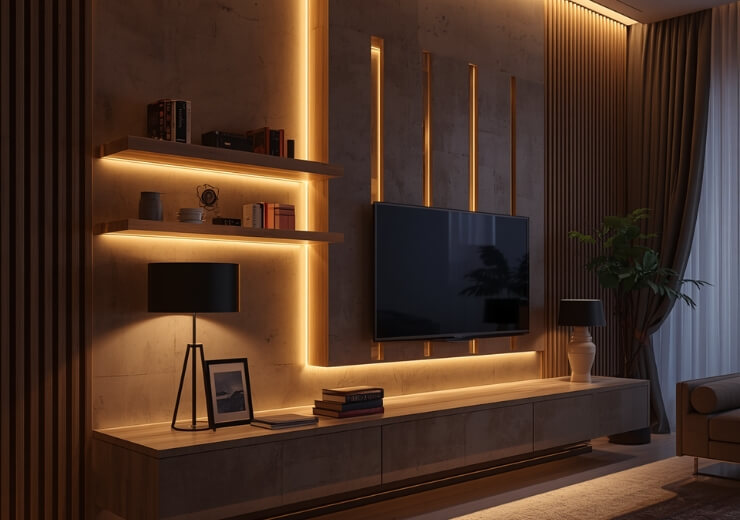
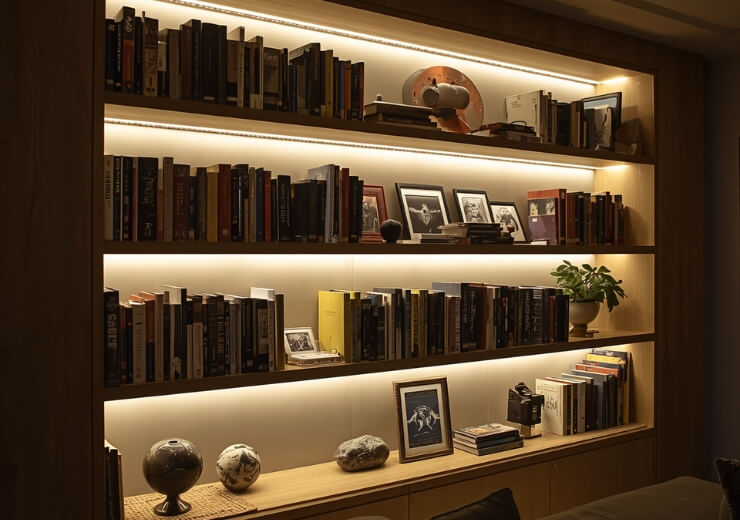
Three strong examples stand out. Wardrobe hanging rails with integrated profiles give practical front lighting on clothes. Bookcase shelf undersides use mini channels for layered accent lighting. Bathroom mirror cabinets use side profiles or top channels to improve face illumination.
From our manufacturing floor perspective, profiles also simplify OEM production because routed grooves and fixed section sizes are easier to standardize than freehand strip placement.
Pro Tip from the VST Technical Team: leave room for the diffuser and wire exit in the furniture drawing stage, not after CNC cutting starts. We often see installers struggle with grooves that are too narrow, too shallow, or blocked by hinge hardware.
Why does this matter? Because a minor drawing oversight can force site modification, which eats margin and delays handover.
| Furniture Item | Profile Style | Installation Position | Main Benefit |
|---|---|---|---|
| Wardrobe | Recessed/slim surface | Side panel or rail | Better visibility |
| Bookcase | Mini surface | Under shelf | Decorative layering |
| Kitchen cabinet | Surface/recessed | Under wall cabinet | Task lighting |
| Vanity mirror | Side/top profile | Mirror frame | Face lighting |
| Display unit | Corner/slim recessed | Shelf edge | Product focus |
7. Which outdoor and architectural ideas are practical?
Outdoor and facade projects need more care. The profile must work with the right IP-rated strip, cover, end caps, and sealing method. Profiles are often used in building outlines, handrails, landscape edges, wall washing details, and exterior steps. In these settings, water ingress and thermal cycling are the real enemies.
A common mistake is assuming any aluminum channel is suitable outdoors. It is not. The application needs corrosion awareness, drainage logic, and secure sealing. For exterior stairs, a robust stair profile with anti-slip design is a safer choice.
For facade reveals, recessed linear channels help create clean architectural lines. For handrails, compact channels can provide guidance light without visible strip exposure.
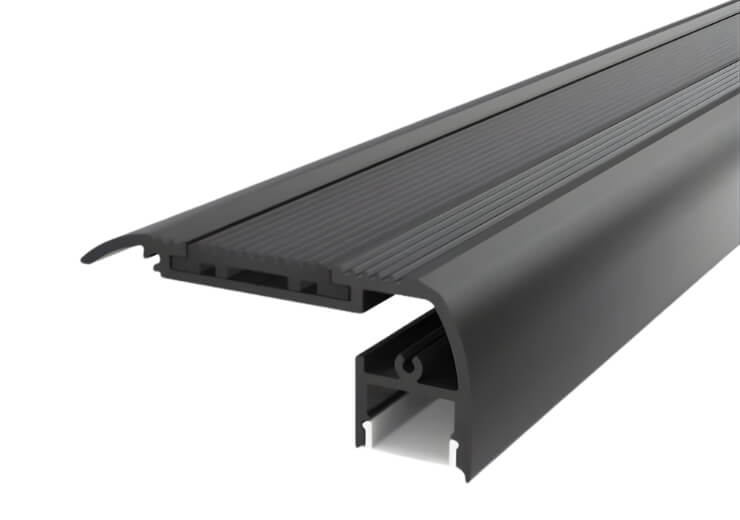
When we tested this against a standard indoor channel used outside, failure showed up early at cable exits and poorly sealed end caps. So the system should be treated as one assembly, not separate parts.
| Outdoor Use | Needed Features | Risk if Ignored |
|---|---|---|
| Exterior step | Strong cover, anti-slip, IP protection | Damage and safety issues |
| Facade line | UV-resistant diffuser, sealing | Water ingress, yellowing |
| Handrail | Compact body, secure fixing | Vibration loosening |
| Landscape edge | Corrosion awareness, drainage | Early deterioration |
| Balcony cove | Protected cable exit | Moisture failure |
8. How do you choose between 12V, 24V, COB, and standard strips?
Profile selection is only half the job. The strip inside it must match the application. Short decorative runs may work fine at 12V, but longer installations often perform better at 24V because voltage drop is lower.
COB strips produce a smoother light line in shallow channels, while standard SMD strips may need deeper profiles or denser diffuser strategies.
We explain this because ignoring strip-profile compatibility leads to visible dots, brightness drop, and customer complaints. In a hotel corridor cove, 24V is usually easier for longer continuous runs.
In a mirror cabinet, a high-density strip or COB type gives a cleaner reflected image. In a retail shelf, a 24V strip with proper feed planning reduces uneven brightness from one end to the other.
Here’s a practical comparison.
| Parameter | 12V Strip | 24V Strip |
|---|---|---|
| Typical run stability | Shorter runs | Better for longer runs |
| Voltage drop risk | Higher | Lower |
| Segment cut length | Shorter | Often longer |
| Best use | Small furniture, short accents | Commercial linear runs |
| Driver planning | More feeds on long jobs | Fewer feeds in many cases |
| Parameter | COB Strip | Standard SMD Strip |
|---|---|---|
| Dot-free effect | Better | Depends on density and diffuser |
| Profile depth need | Often lower | Usually higher |
| Premium visual finish | Strong | Moderate |
| Service familiarity | Growing | Very common |
| Best use | Mirror, hospitality, premium joinery | General linear lighting |
9. What installation mistakes cause failures and callbacks?
Most failures are not caused by the LED chip. They come from installation errors. Poor surface cleaning, weak thermal contact, wrong driver sizing, blocked ventilation, bad end-cap sealing, and rushed solder joints all create trouble later.
We often see installers struggle with adhesive-only mounting inside dusty or oily cabinets. Another issue is forcing strips into channels narrower than the PCB width. A third is overloading the driver with no headroom.
In one field example, a restaurant bar used warm white strips in a sealed timber recess without enough aluminum mass. Output dropped over time, and color shifted slightly due to heat stress.
Ready for the good part? Most of these problems are preventable with a simple checklist.
| Check Item | What to Verify | Why It Matters |
|---|---|---|
| Profile width | Matches strip PCB width | Avoid pressure damage |
| Surface prep | Clean and dry mounting base | Better adhesion |
| Driver size | Includes safety margin | Stable power delivery |
| Cable exit | Protected from pulling | Fewer connection faults |
| Diffuser fit | Locks correctly | Better finish and protection |
| End caps | Properly seated/sealed | Stops dust and moisture |
| Feed planning | Suitable for run length | Reduces voltage drop |
10. How do you specify the right profile for long-term project success?
A good specification should cover profile dimensions, aluminum weight, diffuser type, mounting accessories, strip width, target IP level, run length, power feed points, and expected visual result. If the project calls for a dot-free line, state it clearly.
If maintenance access is limited, note service strategy before procurement starts.
Here is the deal. The cheapest channel is rarely the lowest-cost solution. Thin aluminum may save money upfront but can raise thermal stress and create installation inconsistency.
A weak diffuser can crack during maintenance. Poorly fitting clips can slow site work. For chain retail, hospitality, office joinery, and OEM furniture, consistent specification is what protects margin.
In our lab tests using integrating spheres, output differences from diffuser choice were easy to measure. Thermal imaging also showed the effect of aluminum mass on strip temperature. That is why the profile should be specified like a system part, not decoration.
| Specification Item | What to Define |
|---|---|
| Channel type | Surface, recessed, corner, suspended |
| Internal width | Match strip PCB and cable space |
| Diffuser | Clear, frosted, opal, anti-glare |
| Material mass | Suit thermal load |
| Accessories | End caps, clips, joiners, suspension kit |
| Environment | Indoor, damp area, outdoor |
| Electrical plan | Voltage, wattage, feed points, driver access |
| Finish goal | Visible line, hidden source, trimless look |
Conclusion
LED aluminum profiles are not just housings for strip lights. They shape light quality, protect the strip, support heat control, and make installation more repeatable across furniture, retail, office, residential, and exterior projects.
The right application choice reduces callbacks and improves the final visual result. If you are unsure which profile depth, diffuser, or voltage setup fits your job, send your drawings to our engineering team and we can review the layout with you.
FAQ
Q1: What is an LED aluminum profile?
An LED aluminum profile is a metal channel designed to hold and protect LED strip lights. It improves heat dissipation, supports mounting, and works with diffusers for a cleaner light output.
Q2: How does an LED aluminum profile improve strip performance?
It helps transfer heat away from the LED strip, protects the PCB from damage, and creates a more professional installation. With a proper diffuser, it can also reduce visible LED dots.
Q3: Where are LED aluminum profiles commonly used?
They are widely used in cabinets, wardrobes, shelves, retail displays, office ceilings, reception desks, stair lighting, mirror lighting, and architectural facade details.
Q4: Should I choose surface or recessed LED profiles?
Choose surface profiles for easy retrofit installation and recessed profiles when you want a flush, integrated appearance. The right choice depends on construction method, budget, and finish goal.
Q5: Are LED aluminum profiles suitable for outdoor use?
Yes, but only if the full system is designed for outdoor conditions. You need suitable sealing, compatible end caps, proper cable protection, and the right IP-rated LED strip.
