
Linear profiles form the backbone of modern architectural lighting systems, yet many professionals struggle with understanding their technical specifications and optimal applications. These specialized aluminum channels enhance LED strip functionality while providing a sleek, professional finish that raw LED installations simply cannot match. For lighting distributors, contractors, and project managers, grasping the full technical meaning behind linear profiles leads to better project outcomes, fewer callbacks, and higher client satisfaction.
The right knowledge about linear profiles can transform your lighting projects from basic lighting to sophisticated lighting solutions that meet exact client specifications. Get a full understanding of linear profiles with this in-depth guide.
1. What exactly is linear profile in lighting terminology?

Linear profiles represent specialized aluminum extrusions designed specifically to house LED strip lights and related components. These profiles serve multiple crucial purposes beyond simple aesthetics. Here’s what makes them truly special: Linear profiles effectively dissipate heat generated by LED strips, significantly extending their operational lifespan by preventing premature degradation of the diodes. Additionally, they protect sensitive electronic components from dust, moisture, and physical damage.
Core components of a linear profile system
A complete linear profile system typically consists of several key components working together:
- Aluminum extrusion channel (the profile itself)
- Diffuser cover (frosted, clear, or specialized lens)
- End caps for professional finishing
- Mounting brackets or clips
- Optional accessories (connectors, corner pieces, etc.)
Material composition and quality factors
The aluminum alloy used in manufacturing linear profiles significantly impacts performance. Most quality profiles utilize 6063-T5 aluminum alloy, prized for its excellent thermal conductivity, corrosion resistance, and structural strength at relatively lightweight. Surface treatments such as anodizing not only enhance appearance but provide critical protection against environmental factors.
Standard dimensional characteristics
Linear profiles come in various standardized dimensions to accommodate different LED strip widths and application requirements. Common widths range from ultra-slim 7mm profiles to wider 25mm+ channels designed for higher-power LED strips or specialized optics. What many don’t realize is that the profile depth directly correlates with heat dissipation capability, making deeper profiles better suited for higher wattage LED applications.
| Profile Type | Typical Width (mm) | Common Depths (mm) | Suitable LED Strip Width | Typical Applications |
| Ultra-slim | 7-12 | 6-8 | 8mm max | Cabinet lighting, shallow recesses |
| Standard | 15-18 | 8-12 | 10-12mm | General purpose, retail displays |
| Wide | 20-25 | 10-15 | Up to 20mm | High-power LEDs, specialized optics |
| Deep | Various | 20+ | Various | Professional lighting, heat-intensive applications |
2. How does linear profile differ from standard housing options?

Linear profiles represent a significant advancement over basic LED strip mounting options like adhesive tape or generic channels. Think about this for a moment… While direct mounting via adhesive backing might seem cost-effective initially, this approach substantially reduces LED lifespan through inadequate heat management and exposes components to environmental damage.
Comparison with direct mounting methods
Direct mounting relies solely on the adhesive backing of LED strips, which creates several problems: poor heat dissipation, limited mounting surface options, and vulnerability to moisture and dust. Professional linear profiles address these issues through aluminum’s thermal conductivity, mounting versatility, and protective enclosure systems.
Advancements over generic aluminum channels
Generic aluminum channels lack the specialized design features of true linear profiles. Professional linear profiles include precisely engineered light diffusion, sophisticated mounting systems, and compatibility with a wide range of accessories that generic channels simply cannot match. The optical properties alone make the investment worthwhile for projects where light quality is a priority.
Integration capabilities with building materials
Modern linear profiles feature advanced integration capabilities with common building materials and fixtures. Recessed profiles can be seamlessly incorporated into drywall, wood, tile, and concrete applications through specialized mounting brackets and trim pieces. Surface-mounted options feature clip systems that accommodate thermal expansion while keeping fasteners hidden.
3. What types of linear profile exist for different applications?
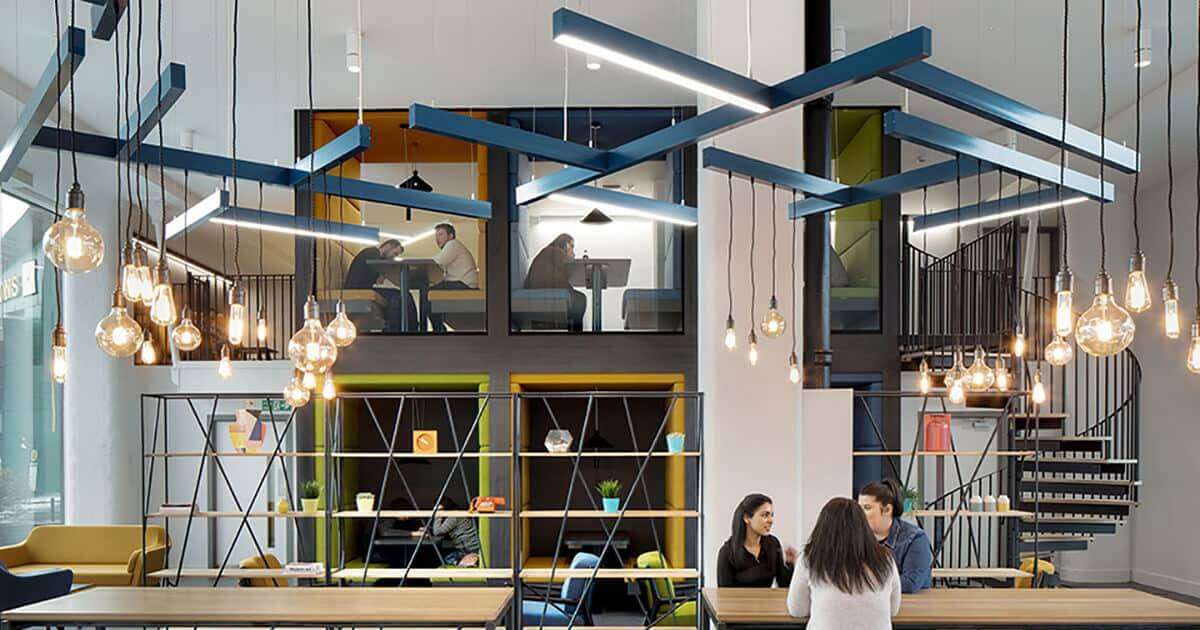
The range of linear profile designs has expanded dramatically to address specific lighting needs across industries. The real secret that experienced lighting professionals know is matching the exact profile type to the specific application requirements dramatically improves both installation efficiency and final lighting performance.
Surface-mounted profiles
Surface-mounted profiles represent the most straightforward installation option, attaching directly to walls, ceilings, or other flat surfaces. These profiles typically feature either a flat base for direct screwing/adhesion or specialized mounting clips that allow for thermal expansion. Popular variants include slim designs for discreet applications and wider channels for higher light output requirements.
Recessed profiles
Recessed profiles integrate directly into surfaces for a nearly seamless appearance. These profiles require precise cutting of installation surfaces but deliver superior aesthetic results by minimizing visual profile presence. Common subtypes include:
- Trimless recessed profiles that blend completely with surroundings
- Flanged recessed profiles featuring visible trim for easier installation
- Deep recessed profiles that minimize glare through setback positioning
Corner and specialized profiles
Corner profiles address the challenge of lighting transitions between planes, available in internal (90° inward) and external (90° outward) configurations. Other specialized designs include:
- Step profiles for stair lighting applications
- Curved profiles for rounded architectural elements
- Handrail profiles combining illumination with functional features
- High-impact profiles for floor installation and traffic areas
Wall washer profiles
Wall washer profiles incorporate specialized optical systems to evenly illuminate vertical surfaces. These profiles typically feature asymmetric reflectors or lenses that direct light primarily in one direction for maximum wall coverage with minimal hotspotting. Advanced models include adjustable optics to fine-tune the lighting effect based on installation distance from the wall.
| Profile Category | Installation Method | Light Distribution | Typical Applications | Key Features |
| Surface-mounted | Direct attachment | Directional or diffused | Retail, commercial, residential | Ease of installation, retrofit friendly |
| Recessed | Cut-in installation | Integrated, seamless | High-end residential, hospitality | Clean aesthetics, architectural integration |
| Corner | Surface or recessed | Multi-directional | Accent lighting, architectural features | Transition lighting, space definition |
| Wall washer | Surface or recessed | Asymmetric, focused | Art display, feature walls, retail | Specialized optics, even illumination |
4. What factors determine the quality of linear profiles?

Not all linear profiles deliver equal performance, with significant quality variations across manufacturers and price points. Pay close attention to this part… Professional lighting projects demand profiles with specific quality metrics that directly impact installation ease, longevity, and lighting performance.
Aluminum alloy composition
The specific aluminum alloy composition significantly impacts thermal performance and mechanical durability. Industry-standard 6063-T5 aluminum provides optimal balance between cost and performance, while higher-grade alloys may offer marginal improvements at substantial cost increases. Anodization thickness (typically measured in microns) determines corrosion resistance and surface durability, with 15-20 micron thicknesses recommended for commercial applications.
Optical design elements
Diffuser quality dramatically affects light output characteristics. Premium diffusers maintain high light transmission (85%+) while effectively eliminating LED hotspots. Advanced optical treatments include:
- Microprismatic texturing for glare reduction
- Specialized diffusion patterns for optimal beam shaping
- High-impact polycarbonate formulations for durability
- UV-resistant compositions for outdoor applications
Mechanical connection systems
The sophistication of connection systems separates professional profiles from budget options. Quality profiles feature precisely engineered connections that maintain alignment across joins without visible seams or light leakage. Advanced systems include expansion compensation to prevent buckling during thermal cycling and quick-connect mechanisms for reduced installation time.
Thermal management capabilities
Heat dissipation directly correlates with LED lifespan and color stability. Superior profiles incorporate thermal management features like:
- Internal heat sink fins to increase surface area
- Thermal transfer materials between LED strips and aluminum
- Strategic material thickness in key heat generation zones
- Ventilation channels for enhanced air circulation
5. How does linear profile impact lighting performance?

Linear profiles do far more than simply house LED strips—they fundamentally transform light quality and distribution characteristics. Here’s something most suppliers won’t tell you… The profile selection often impacts lighting performance more significantly than marginal differences between LED strip specifications.
Light distribution control
The profile shape and diffuser combination determine beam angle and light distribution. Shallow profiles with flat diffusers typically produce wide beam angles (120°+), while deeper profiles naturally narrow the beam pattern. Advanced profiles incorporate reflective interior surfaces or specialized lens systems to precisely shape light output patterns for specific applications.
Heat management effects
Effective thermal management through properly designed profiles delivers multiple performance benefits:
- Extended LED lifespan (up to 30-50% longer operational hours)
- Maintained color consistency throughout operating life
- Reduced color shift over time (lower MacAdam ellipse drift)
- More stable lumen output throughout temperature fluctuations
Protection from environmental factors
Environmental protection significantly impacts long-term performance reliability. Quality profiles with appropriate IP-rated designs prevent common failure modes:
- Moisture ingress leading to LED failure or electrical shorts
- Dust accumulation causing overheating
- Physical impact damage to LED components
- UV degradation of exposed components
| Profile Feature | Performance Impact | Technical Benefit | Application Consideration |
| Profile depth | Beam angle control | Narrower beam with greater depth | Match to desired lighting effect |
| Diffuser type | Light quality, distribution | Hotspot elimination, even light | Select based on viewing angle |
| Heat sink design | Thermal management | Extended LED lifespan | Critical for high-power applications |
| IP rating | Environmental protection | Reliability in target environment | Match to installation conditions |
6. How do you select the right linear profile for specific projects?

Selecting the appropriate linear profile involves balancing multiple technical and aesthetic considerations. This next part could save your next project… A systematic selection approach prevents costly mistakes and ensures optimal lighting performance.
Technical requirement analysis
Begin with a comprehensive analysis of technical requirements:
- LED strip specifications (width, power density, voltage)
- Required light output and distribution pattern
- Environmental conditions (temperature, humidity, exposure)
- Mounting surface characteristics and limitations
- Power supply and control gear accommodation needs
Aesthetic considerations
Aesthetic factors must align with architectural design intent:
- Profile visibility preferences (visible feature vs. hidden source)
- Finish options (anodized, powder coated, custom colors)
- Proportional relationship to surrounding elements
- Light effect priorities (indirect glow vs. direct illumination)
Installation and maintenance factors
Practical installation and maintenance considerations include:
- Accessibility requirements for future maintenance
- Mounting system compatibility with surface materials
- Continuous run capabilities and connection methods
- Tools and skills required for installation
- Component replaceability (diffusers, end caps, etc.)
Cost-benefit analysis
Evaluate total cost of ownership beyond initial purchase price:
- Installation labor requirements and complexity
- Expected service life based on construction quality
- Energy efficiency implications of thermal management
- Maintenance frequency and associated costs
- Potential warranty differences between options
7. How do installation methods vary across linear profile types?
Installation methods vary significantly between profile types, with each approach offering distinct advantages and limitations. The real challenge comes when… integrating these systems with existing architectural elements while maintaining both aesthetic integrity and functional performance.
Surface mounting techniques
Surface mounting represents the most straightforward approach but requires careful attention to several factors:
- Surface preparation requirements (cleaning, priming, leveling)
- Appropriate fastener selection based on substrate material
- Proper spacing of mounting clips to prevent sagging
- Thermal expansion allowance for longer runs
- Cable management solutions for power feed points
Recessed installation methods
Recessed installations demand precise preparation and coordination:
- Exacting cutting tolerances (typically ±1mm maximum)
- Structural considerations for ceiling/wall integrity
- Proper depth allowance for profile plus clearance
- Advance planning for power feed locations
- Coordination with drywall, millwork, or other trades
Specialized mounting solutions
Advanced installations may require specialized mounting approaches:
- Suspension systems for pendant applications
- Magnetic mounting for easily reconfigurable installations
- Spring-tension systems for stretched ceiling integration
- Rotating mounts for adjustable direction lighting
- Waterproof mounting for wet location applications
| Installation Method | Required Tools | Skill Level | Typical Challenges | Best Practices |
| Surface clip mount | Drill, screwdriver, level | Basic | Ensuring straight alignment | Use laser level, template marking |
| Recessed drywall | Router, drywall tools | Advanced | Clean cuts, dust management | Pre-installation mockups, dust extraction |
| Tile/concrete recess | Diamond blade, masonry tools | Expert | Precise cutting, waterproofing | Cut before installation, waterproof testing |
| Suspended mounting | Ceiling anchors, cable tools | Intermediate | Level suspension, cable management | Use adjustment mechanisms, cable concealers |
8. What are the common challenges with linear profile and their solutions?

Even with careful planning, linear profile installations can present specific challenges that require technical solutions. Let’s tackle these headaches head-on… Most common issues have established solutions that professional installers employ to ensure flawless results.
Light uniformity problems
Achieving uniform light distribution represents one of the most common challenges:
- Problem: Visible LED hotspots through diffuser
- Solution: Increase LED-to-diffuser distance or use higher-density diffusion material
- Problem: Dark spots at profile junctions
- Solution: Use solderless connectors or precise solder joints with continuous LED placement
- Problem: Uneven wall washing effect
- Solution: Adjust profile distance from wall or use specialized asymmetric wall washer profiles
Thermal management issues
Heat-related challenges can compromise performance and longevity:
- Problem: Profile overheating with high-power LED strips
- Solution: Select deeper profiles with more heat dissipation capacity or add heat sinks
- Problem: Limited heat transfer due to poor contact
- Solution: Use thermal conductive tape between LED strip and profile
- Problem: Heat buildup in enclosed spaces
- Solution: Incorporate ventilation openings or specify lower power density
Installation alignment difficulties
Precise alignment challenges often emerge during installation:
- Problem: Maintaining straight lines over long runs
- Solution: Use laser alignment tools and increase mounting point frequency
- Problem: Corner transitions with visible gaps
- Solution: Employ purpose-made corner connectors or miter cuts with precise angles
- Problem: Uneven recessed depths
- Solution: Use adjustable mounting brackets or shims for consistent depth
Water and dust ingress prevention
Environmental protection challenges frequently arise:
- Problem: Water entry at profile joints
- Solution: Apply silicone sealant at joints or use IP-rated continuous gaskets
- Problem: Dust accumulation on diffuser surface
- Solution: Select anti-static diffuser materials or apply anti-static treatment
- Problem: Cable entry point vulnerability
- Solution: Use proper cable glands or sealed entry points with appropriate strain relief
9. How do codes and regulations impact linear profile selection?

Regulatory compliance represents a critical consideration that must inform linear profile selection and installation. Far too many projects face costly delays when… installations fail inspections due to overlooked compliance issues that could have been addressed during specification.
Electrical safety standards
Electrical safety requirements vary by region but typically address:
- Low voltage directive compliance (for LED drivers and controls)
- Proper grounding requirements for metal profiles
- Isolation between class I and class II circuits
- Maximum allowable voltage drop over distances
- Wire gauge requirements based on current load
Fire safety considerations
Fire safety regulations commonly address several profile-related factors:
- Flame spread ratings for materials used in plenum spaces
- Heat buildup limitations in enclosed fixtures
- Fire barrier penetration requirements for recessed installations
- Emergency lighting circuit separation
Environmental protection ratings
Environmental protection standards prescribe minimum requirements:
- IP (Ingress Protection) ratings for various installation locations
- Minimum IP20 for dry indoor locations
- IP44/IP45 for bathroom zones with splash exposure
- IP65/IP67 for outdoor or wet location installations
- IK ratings for impact resistance in accessible locations
Energy efficiency regulations
Energy codes increasingly impact lighting systems through:
- Minimum efficiency requirements for complete luminaire systems
- Controls requirements for dimming and occupancy sensing
- Power density limitations for various space types
- Standby power consumption restrictions
10. What future developments are emerging in linear profile technology?

Linear profile technology continues to evolve rapidly with several exciting developments emerging. What’s particularly fascinating is how… these innovations are responding directly to market demands for simplified installation, enhanced performance, and improved integration with smart building systems.
Advanced material innovations
Material science advancements are transforming profile capabilities:
- Carbon-fiber reinforced polymers for lightweight, high-strength applications
- Enhanced thermal composites with superior heat dissipation
- Self-healing surface technologies that resist scratching
- Antimicrobial surface treatments for healthcare applications
- Extremely thin-wall extrusion techniques maintaining structural integrity
Integrated smart lighting capabilities
Profiles are increasingly incorporating smart technology elements:
- Built-in sensor arrays (motion, ambient light, occupancy)
- Integrated wireless communication nodes (Bluetooth, Zigbee, Thread)
- Direct power-over-data capabilities eliminating separate control wiring
- Tunable white and human-centric lighting functionalities
Installation simplification innovations
Installation processes are becoming significantly streamlined:
- Tool-free assembly systems reducing installation time
- Modular connection architectures for plug-and-play implementation
- Self-leveling mounting systems accommodating uneven surfaces
- Pre-wired profiles reducing on-site electrical work
- Advanced manufacturing techniques for custom curved sections
| Innovation Category | Current Development Stage | Expected Market Impact | Key Applications |
| Composite materials | Early commercial adoption | High (cost reduction, performance) | Architectural, transportation |
| Integrated sensors | Mainstream adoption | Transformative (smart building) | Commercial, residential |
| Tool-free systems | Widespread availability | Significant (labor savings) | Retrofit, quick-turn projects |
| Li-Fi capabilities | Research/prototype | Emerging (specialized markets) | Secure facilities, data-rich environments |
Sustainability enhancements
Environmental considerations are driving substantial innovations:
- Cradle-to-cradle certified components for full recyclability
- Energy harvesting capabilities to power sensors and controls
- Bio-based polymer components reducing petroleum dependence
- Low-VOC manufacturing processes for improved indoor air quality
- Design for disassembly allowing complete component separation
FAQ Section
Q1: What is the difference between a linear profile and an LED channel?
Linear profiles represent engineered lighting solutions with specific optical, thermal, and mechanical properties designed for professional installations. LED channels typically refer to basic aluminum housings without the sophisticated features of true profiles such as precision diffuser optics, thermal management systems, and specialized mounting options. Professional linear profiles incorporate precise tolerances, tested optical characteristics, and engineered component integration that generic channels lack.
Q2: How do I calculate what linear profile depth I need for my LED strip?
Profile depth selection requires evaluating several factors: First, measure your LED strip width and add 2-3mm clearance for insertion ease. Second, consider the LED power density—higher wattage strips (above 15W/m) benefit from deeper profiles with better heat dissipation. Third, evaluate desired optical effects—deeper profiles create more diffused light with fewer hotspots. Finally, check beam angle requirements—shallow profiles typically produce wider beam angles while deeper profiles naturally narrow light distribution.
Q3: Are aluminum linear profiles suitable for outdoor applications?
Aluminum linear profiles can be suitable for outdoor applications when properly specified with: appropriate IP65/IP67 waterproof profile ratings achieved through silicon gaskets and sealed end caps; marine-grade aluminum alloys for coastal environments; thicker anodization layers (20+ microns) for corrosion resistance; UV-resistant polycarbonate diffusers to prevent yellowing; and proper drainage allowances preventing water accumulation. Additionally, expansion/contraction considerations become more critical outdoors where temperature fluctuations can cause dimensional changes up to 1mm per meter.
Q4: How does linear profile affect LED strip lifespan?
Properly designed linear profiles significantly extend LED strip lifespan through effective thermal management. Aluminum profiles act as heat sinks, drawing heat away from LED components and dissipating it over larger surface areas. This thermal management prevents junction temperatures from exceeding critical thresholds that accelerate LED degradation. Testing shows high-quality profiles can extend LED operational life by 30-50% compared to non-profile installations, while also maintaining consistent color temperature and preventing premature lumen depreciation.
Q5: Can linear profile be painted or customized to match specific decor?
Linear profiles can be customized through several finishing methods. Powder coating provides durable custom colors with excellent adhesion and scratch resistance, available in virtually any RAL color. Anodizing offers metallic finishes in black, bronze, gold, and custom colors with excellent wear characteristics. Vinyl wrapping presents a non-permanent option for temporary installations or rental properties. Therefore, when customizing, important considerations include heat dissipation impacts (some finishes reduce thermal performance), minimum order quantities for factory-applied finishes, and maintaining electrical conductivity for grounding requirements.
